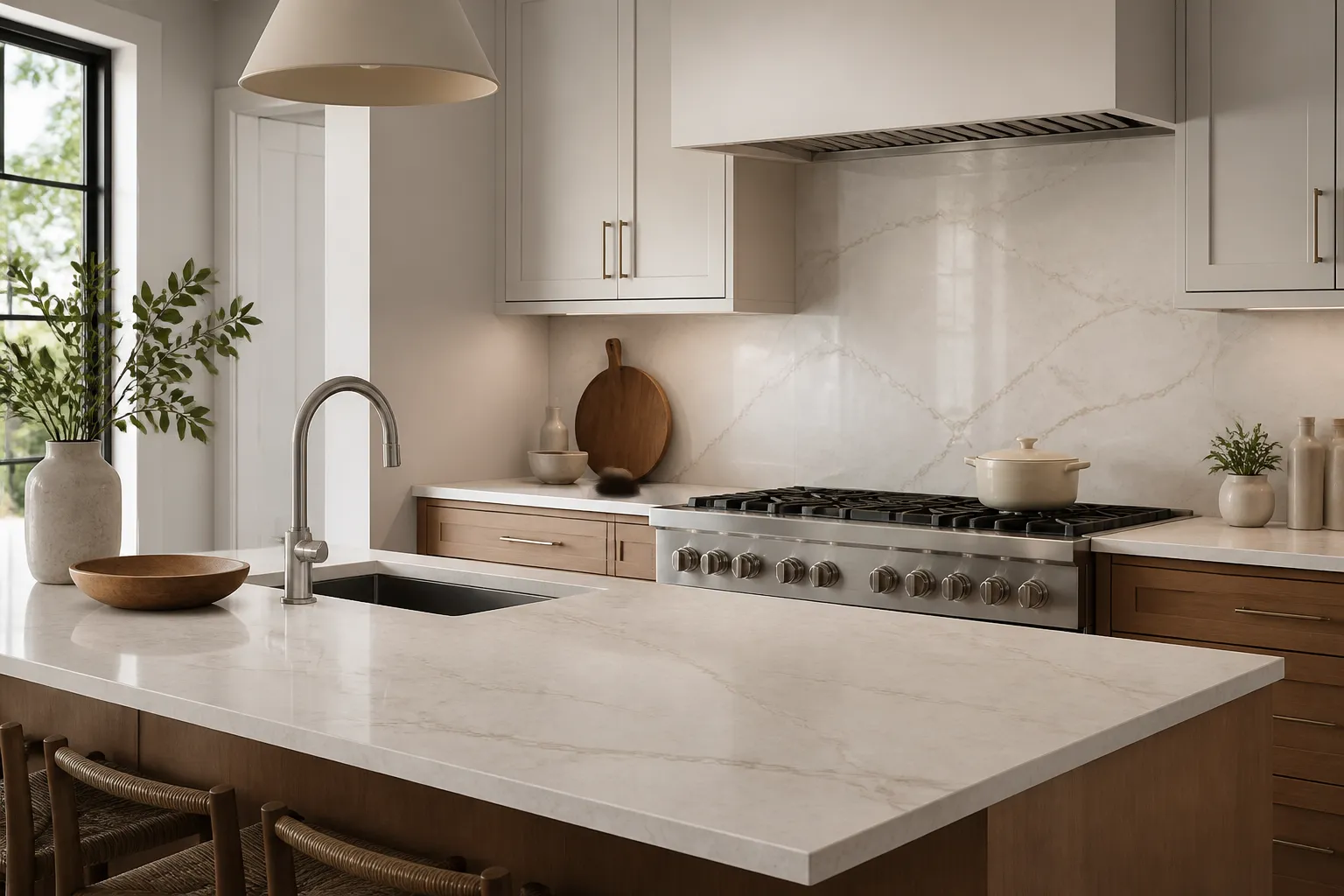
Marietta Countertops offers countertop backsplashes in Marietta and nearby towns. A countertop backsplash does more than protect the wall. It can carry color and pattern through the room, frame a sink area, and make the countertop installation feel complete.
Marietta Countertops can connect you with local professionals to plan a coordinated countertop and backsplash project.
The backsplash protects the wall behind your counter from water, grease, and food splashes. It also ties the counters, cabinets, and walls together. A good backsplash makes cleaning easier and finishes the room.
A short strip of the same material as the counter, about four inches high. It protects the joint between the counter and the wall. It is simple and keeps costs down, and you can paint or tile the wall above it.
The countertop material runs from the counter all the way to the upper cabinets or ceiling. There are no grout lines to clean, and the pattern flows up the wall. It is a high-end look that uses more material.
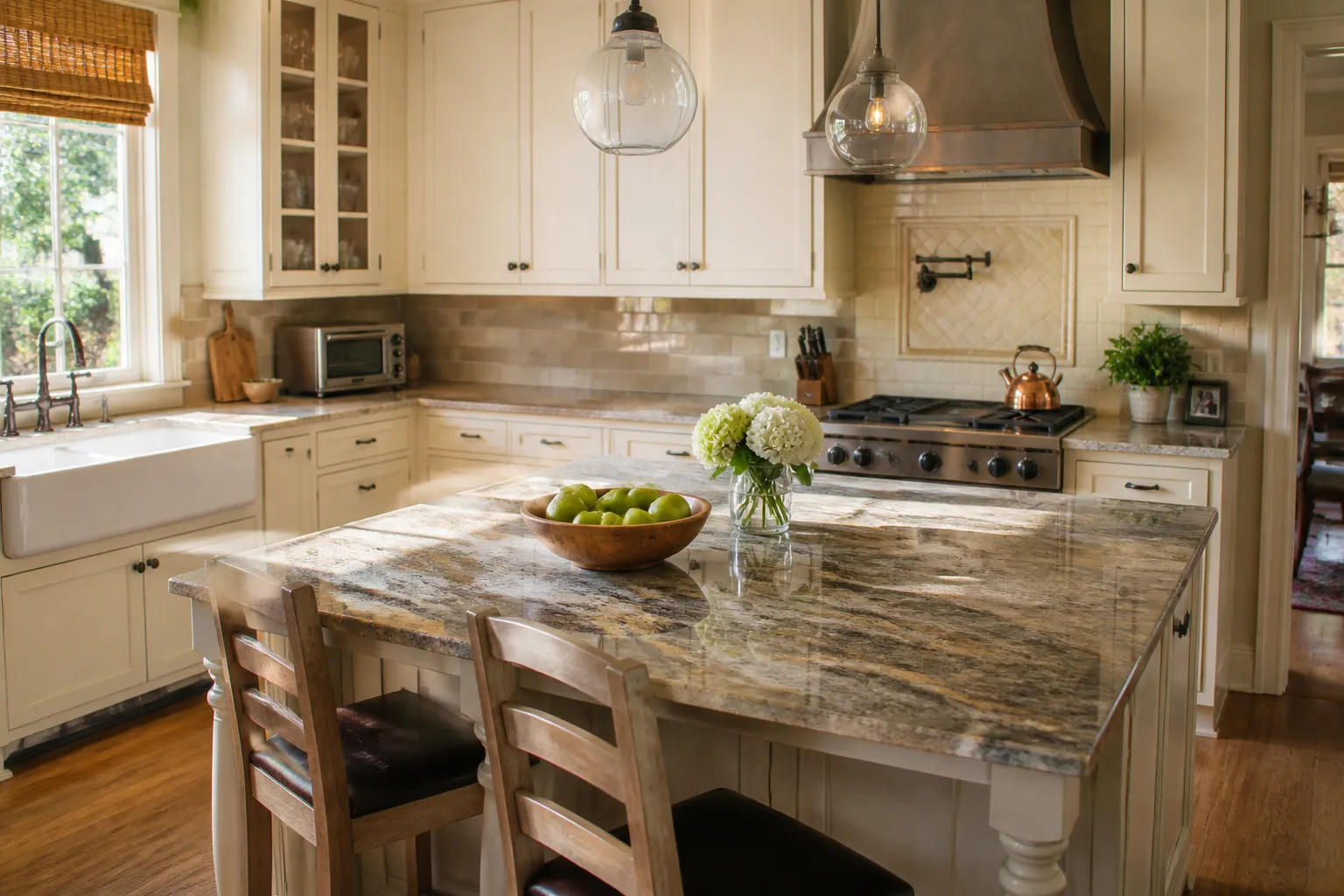
Tile gives you endless colors, shapes, and patterns. It can be a budget-friendly way to add personality. Grout lines need occasional cleaning and sealing.
A matching slab backsplash makes the kitchen feel calm and continuous. A contrasting tile can add color and texture. If your counter has bold veining, a simple tile often works best so the two do not compete. If your counter is plain, a patterned tile can add interest.
Quartz backsplashes are easy to clean and do not need sealing. Granite and marble need the same sealing as the counters. Porcelain slabs are thin, light, and handle heat well behind a cooktop. Tile ranges from ceramic to glass to natural stone.
You can often add or replace a backsplash without changing the counters. Take a sample of your counter to the showroom so you can see colors side by side in good light. If you are adding a slab backsplash, the fabricator will need to template the wall, which may be uneven.
Wipe it down after cooking, especially behind the stove. For tile, clean grout lines now and then and reseal if needed. For natural stone, use a pH-neutral cleaner and reseal on the same schedule as the counters.
Height changes both the look and the cost. A short 4-inch backsplash protects the wall joint and costs the least. A mid-height backsplash, often up to the bottom of the upper cabinets, gives full protection behind work areas. A full-height backsplash runs to the ceiling or hood, which suits open shelving and modern designs. Many homeowners mix heights, using a full-height slab behind the range and a short backsplash elsewhere.
Where the backsplash ends matters more than people expect. On an open wall, it should stop at a clean line, often lined up with the edge of the counter or a cabinet. Exposed edges should be finished, either polished or capped with trim, so they do not look unfinished.
Use slab only behind the range and tile elsewhere. Or choose a simple subway tile and let the countertop be the star.
Material grade, slab count, and cut-outs move the price most. An in-home measure turns these ranges into a real number.
It can, for a seamless look, but contrasting tile works well too. Bold counters usually pair best with simple backsplashes.
Yes. Backsplashes can be added or replaced without new counters in most cases.
It gives a clean, easy-to-clean look with no grout, but it uses more material. Many people use it only behind the stove.
Start Your Project
Share a few details about your space, your preferred material, and your project goals. We will help you take the next step toward a countertop solution that fits your home and style.