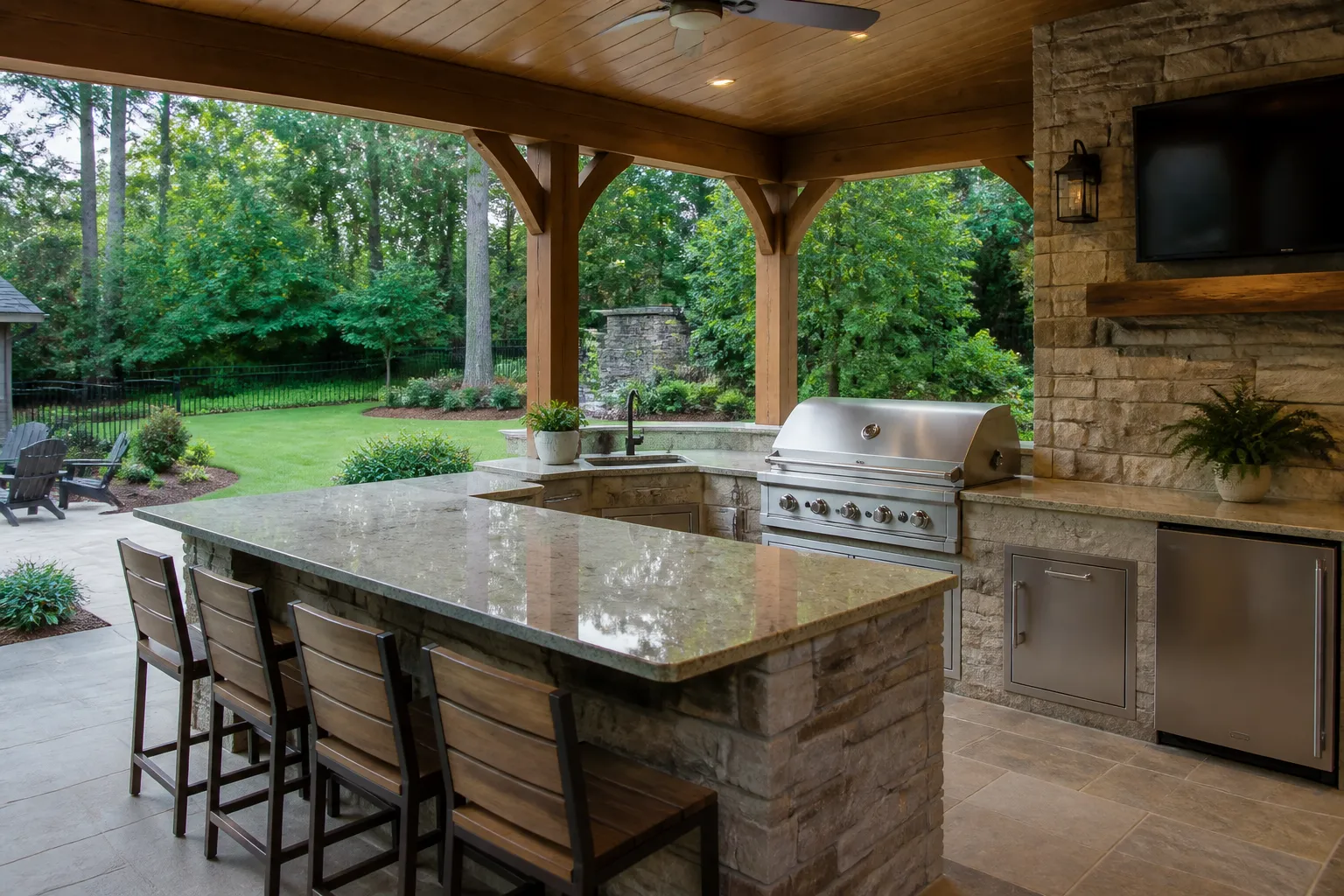
Marietta Countertops provides outdoor kitchen countertops for local homeowners. An outdoor kitchen countertop has different demands than an indoor surface. Sun, rain, heat, cooking equipment, and seasonal cleanup all deserve consideration before material is selected.
Marietta Countertops can connect you with local countertop professionals to discuss a practical outdoor setup.
Outdoor countertops face sun, rain, pollen, and big swings in temperature. In Marietta, long humid summers and summer storms add moisture to the mix. A material that looks great indoors may fade, stain, or crack outside. Choosing the right surface is the most important decision for an outdoor kitchen.
Granite is one of the most popular outdoor choices. It handles heat from grills well and holds up to weather. It does need sealing to keep stains and moisture out. Lighter colors stay cooler in direct sun than dark granite.
Many porcelain products resist fading in sunlight and handle heat well. They do not need sealing. Edges can chip if hit, so pick a simple, sturdy edge.
Concrete counters can be custom shaped and colored. They need sealing and can develop small cracks over time.
Quartz is a top indoor choice, but it is not usually recommended outdoors. Angi notes that quartz can discolor with long exposure to direct sunlight or UV rays. Marble can etch and stain outside, and wood needs constant care in wet weather.
Outdoor counters sit on masonry, block, or framed bases rather than indoor cabinets. The base must be level and strong enough for heavy stone. If you are building a new outdoor kitchen, coordinate the base build with your countertop fabricator so the measurements match.
Wipe away pollen, leaves, and grease often. Reseal granite and concrete on a regular schedule, since sun and rain wear sealers down faster outside. Cover the counters in the off-season if you can. Avoid harsh cleaners that can strip the sealer.
Bring photos of your patio and the grill model you plan to use. Note where you want sinks, side burners, or a bar area. Your fabricator can suggest materials and edge profiles that suit how you will use the space and how much sun it gets.
Outdoors, a honed or leathered finish can be a smart pick. These matte finishes show fewer water spots and pollen marks than a high polish, and they are less slippery when wet. Eased or rounded edges hold up better than sharp edges when grills, coolers, and chairs bump into them.
The grill is the heart of most outdoor kitchens, and it sets the layout. Check the grill maker’s cut-out size before the counter is cut. Some built-in grills need an insulated jacket when set into a combustible base. Leave landing space on both sides for plates, tools, and trays. If you add a side burner or sink, plan the gas line and plumbing before the counter goes in.
Material grade, slab count, and cut-outs move the price most. An in-home measure turns these ranges into a real number.
Granite and many porcelain products are common choices because they handle sun and heat well.
It is not usually recommended. Angi notes quartz can discolor with long sun exposure.
Granite and concrete do. Many porcelain products do not.
Start Your Project
Share a few details about your space, your preferred material, and your project goals. We will help you take the next step toward a countertop solution that fits your home and style.