Marietta Countertops provides countertop design for local homeowners. Countertop design brings together material, color, layout, edges, sinks, backsplashes, and the practical way your household uses the space. A few early decisions can make the entire remodel feel more cohesive.
Marietta Countertops helps homeowners connect with local specialists for practical countertop planning.
Good countertop design starts with daily habits, not just looks. Do you cook every night, bake often, or mostly reheat? Do kids do homework at the island? Do you entertain? The answers shape the material, layout, and edges that will work best.
Each surface has strengths. Quartz is low-maintenance and consistent. Granite brings natural patterns and handles heat. Marble is elegant but needs care. Porcelain is sleek and heat resistant. Butcher block adds warmth. Many kitchens mix two materials, such as stone on the perimeter and wood or a contrasting stone on the island.
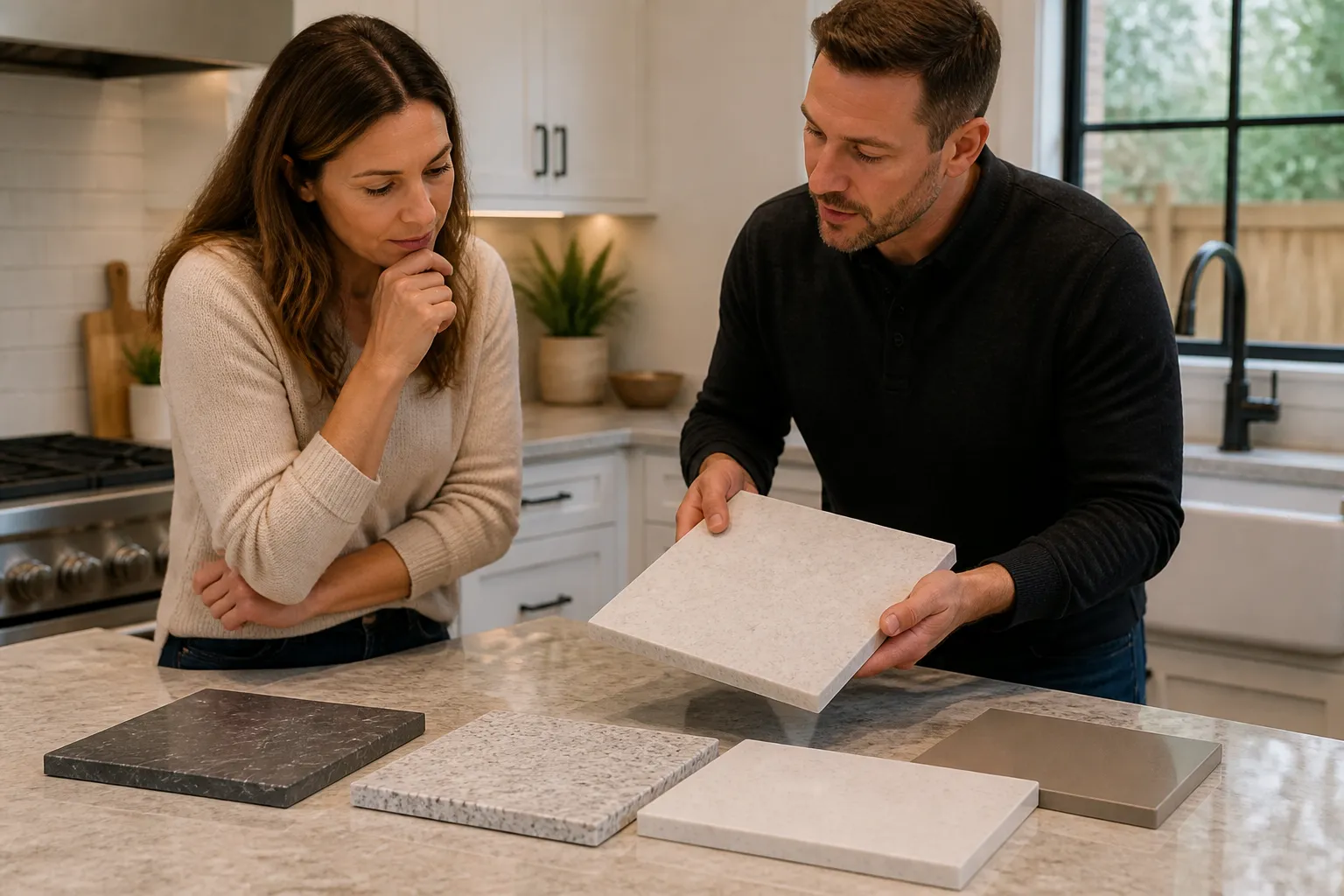
Bring cabinet doors, floor samples, and paint chips when you look at slabs. Colors look different under store lights than in your home, so view samples in your own light when you can.
Busy patterns hide crumbs and water spots. Calm, solid surfaces look clean and modern but show more. If your cabinets or backsplash are bold, a quieter counter often balances the room.
The edge profile changes the whole look. Square and eased edges feel modern. Bullnose and ogee edges feel more traditional. Thicker or mitered edges make a bold statement. Rounded edges are kinder to hips and little heads.
Slabs come in set sizes, so long runs or large islands may need seams. A good design places seams in low-traffic spots and matches the pattern across the joint. Ask your fabricator for a layout drawing before cutting.
Gather photos of kitchens you like and note what you like about each one. Share them with your fabricator. A clear picture of your goals makes it easier to choose a slab, edge, and layout that fit your budget and your home.
Kitchens need the most durable surfaces. Focus on how the counter handles heat near the stove, water near the sink, and knives in the prep zone. Many people choose quartz or granite for the main runs and add a feature material on the island.
Bathroom counters deal with water, soap, and beauty products. Non-porous surfaces like quartz and solid surface are easy to keep clean. A matching backsplash protects the wall behind the sink.
Laundry rooms need a surface that shrugs off detergent spills. Wet bars and coffee stations are great places to use a remnant or a bolder material, since the area is small.
Under-cabinet lights make glossy surfaces shine and show texture in honed finishes. Check samples under the kind of light you will have at home before you decide.
Simple edges and common colors keep the price down. Rare slabs and custom details push it up.
It should work with them, not necessarily match. Contrast often makes both stand out.
Ask for a layout drawing and choose slab sizes and patterns that hide joints well.
Yes. Mixing an island material with a different perimeter material is common.
Start Your Project
Share a few details about your space, your preferred material, and your project goals. We will help you take the next step toward a countertop solution that fits your home and style.