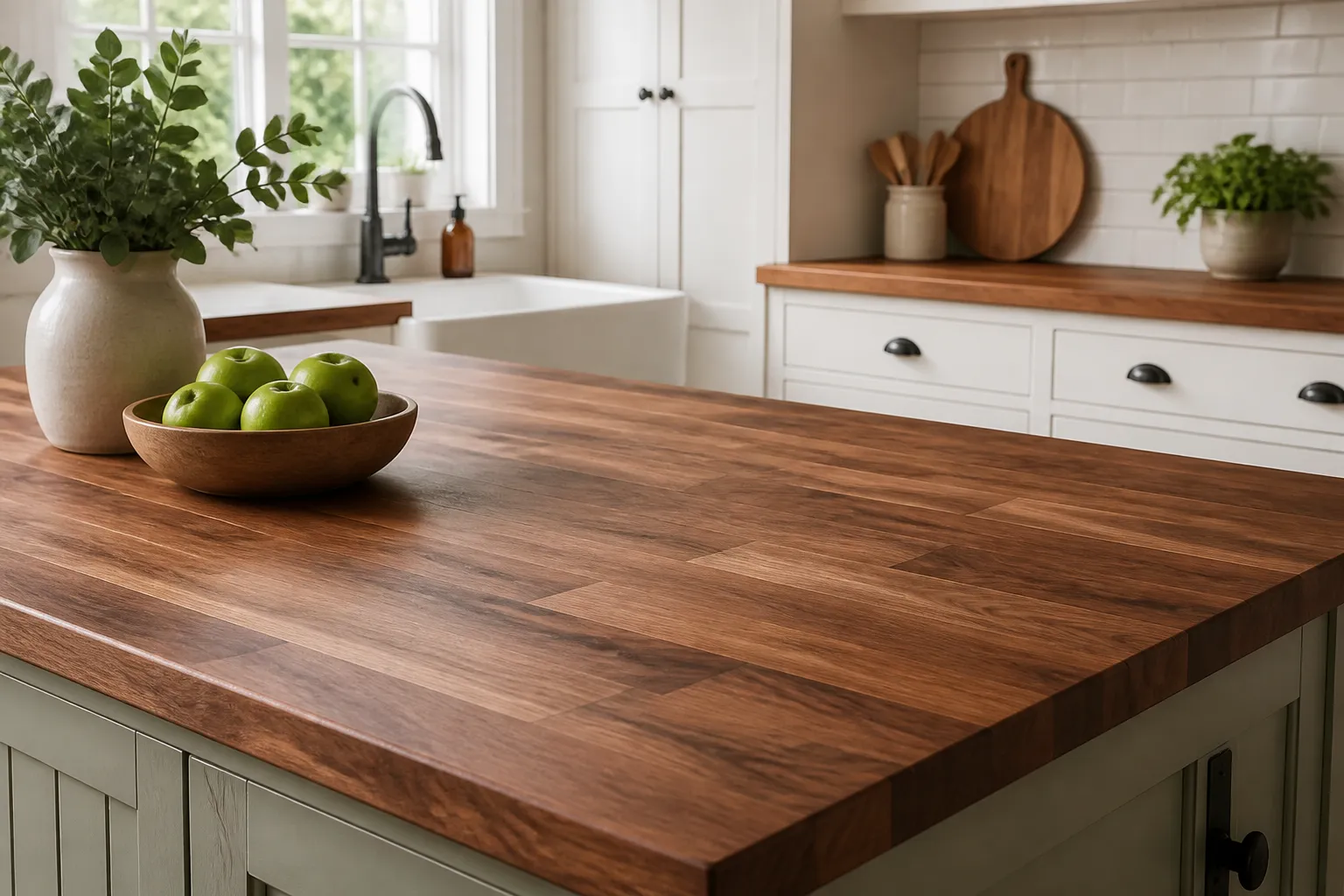
Marietta Countertops handles butcher block countertops for homes and businesses in Marietta and across Cobb County. Butcher block adds natural color and texture that can soften a kitchen, island, or work area. Wood species, grain direction, edge profile, and care expectations are important parts of the selection.
Marietta Countertops helps homeowners connect with local professionals for countertop guidance and installation.
Butcher block countertops are made from strips of hardwood glued together into a thick slab. Maple, oak, walnut, and cherry are common choices. The wood brings warmth and a natural look that stone and quartz cannot match.
Wood needs more care than stone. Unsealed butcher block should be oiled with food-safe mineral oil on a regular schedule, more often when it is new. Some tops are sealed with a varnish instead. Sealed tops resist water better but should not be used as a cutting surface.
Water is the main enemy. Wipe up spills, keep standing water away from seams, and dry the area around the sink. Georgia’s humid summers make sealing and regular care even more important near sinks and dishwashers.
An island is a popular place for wood. It gives you a warm prep surface while the main counters stay in stone or quartz.
Smaller areas are easy to care for and add character.
Wood can work near a sink if it is sealed well and kept dry. Many owners choose stone near the sink and wood elsewhere.
Maple is light and very hard. Walnut is dark and rich but a little softer. Oak has a bold grain. Ask to see samples finished the way your top will be, since oil and varnish change the color.
Wood moves as humidity rises and falls, so it is installed differently than stone. Good installers leave a small gap at walls and use fasteners that let the wood expand and shrink. The top should be sealed or oiled on all sides, including the underside, before it is set. Cutouts for sinks need extra sealing, since raw wood edges soak up water fastest.
Many kitchens use butcher block on an island and stone or quartz on the main counters. This gives you a warm spot for prep and serving, while the busy areas near the sink and stove stay low-maintenance. If you mix materials, ask your installer to match the heights so the surfaces line up cleanly.
Wood tells you when it needs attention. A pale, dry look means it is time to oil. Gray or dark spots near the sink can mean water is soaking in. Rough patches can be sanded smooth and re-oiled. Catching these early keeps a wood top looking good for many years.
Oil finishes look natural and are easy to touch up. Varnish finishes resist water better but are harder to repair. Pick the one that fits how you will use the top.
Simple edges and common colors keep the price down. Rare slabs and custom details push it up.
You can on oiled tops. Cutting will leave marks that can be sanded later. Sealed tops should be protected with a cutting board.
Often at first, then less as the wood builds up a finish. A dry, light look means it is time.
It can be, if it is sealed well and kept dry. Standing water can stain or warp wood.
Start Your Project
Share a few details about your space, your preferred material, and your project goals. We will help you take the next step toward a countertop solution that fits your home and style.