Marietta Countertops provides practical countertop guidance in Marietta, GA. A bathroom vanity countertop has a smaller footprint than a kitchen counter, but it deals with its own challenges: water around the sink, cosmetics, soap, hair products, and frequent cleaning. The best material for your vanity should look right with the room while standing up to the way the bathroom is used. Start by considering moisture resistance, care requirements, sink style, and the look you want to create.
Quartz for low-maintenance bathrooms
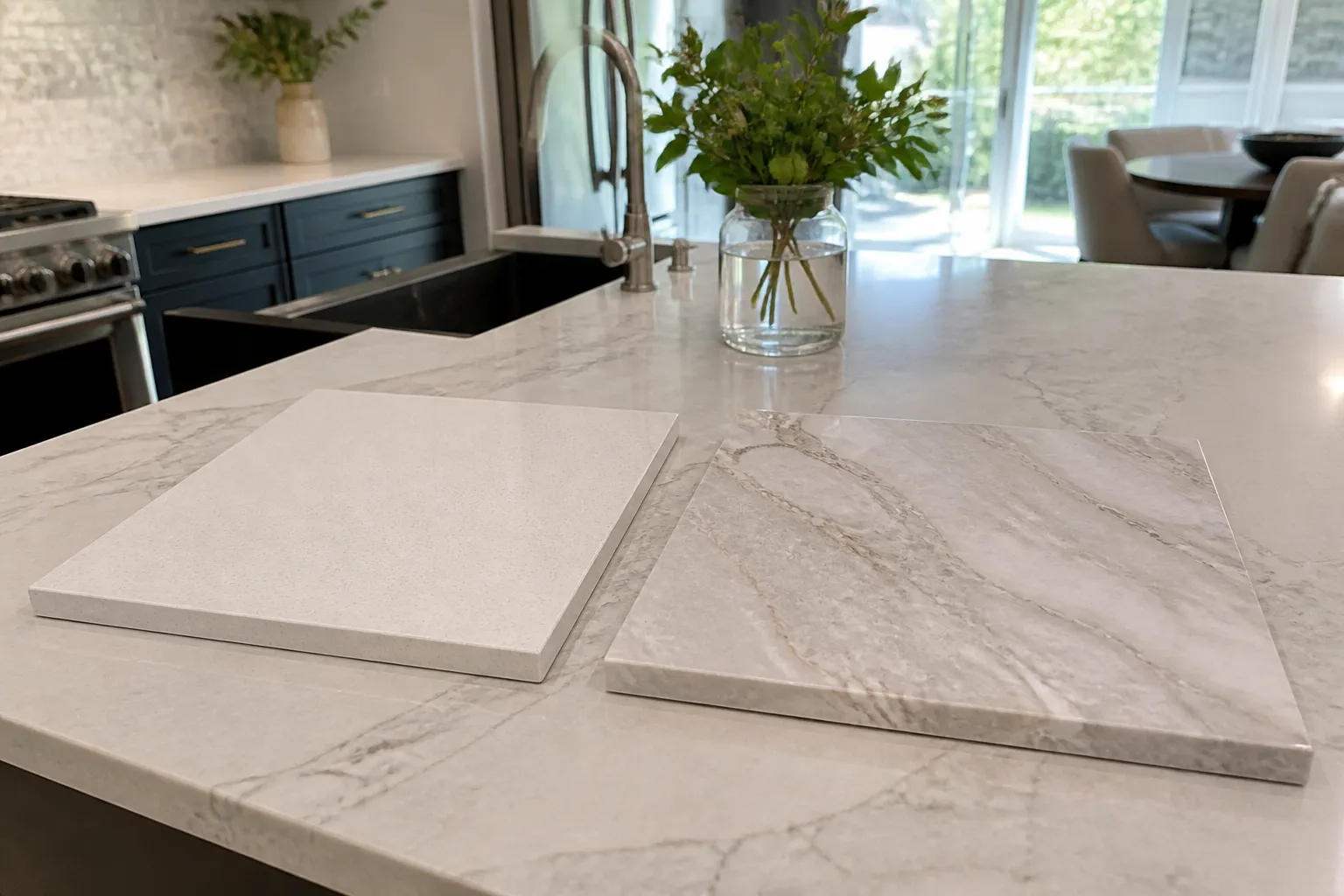
Quartz is a popular vanity choice because its nonporous surface resists everyday moisture and does not usually require sealing. Routine care is simple: use a soft cloth, mild soap, and water, then dry the surface. Quartz comes in a wide variety of whites, warm neutrals, soft veining, and darker colors, which makes it easy to coordinate with tile and cabinetry.
Although quartz is durable, it is not indestructible. Avoid harsh abrasive cleaners and do not assume it can handle intense direct heat from styling tools. A heat-safe pad is helpful when a curling iron or straightener needs a place to rest.
Granite for natural stone character
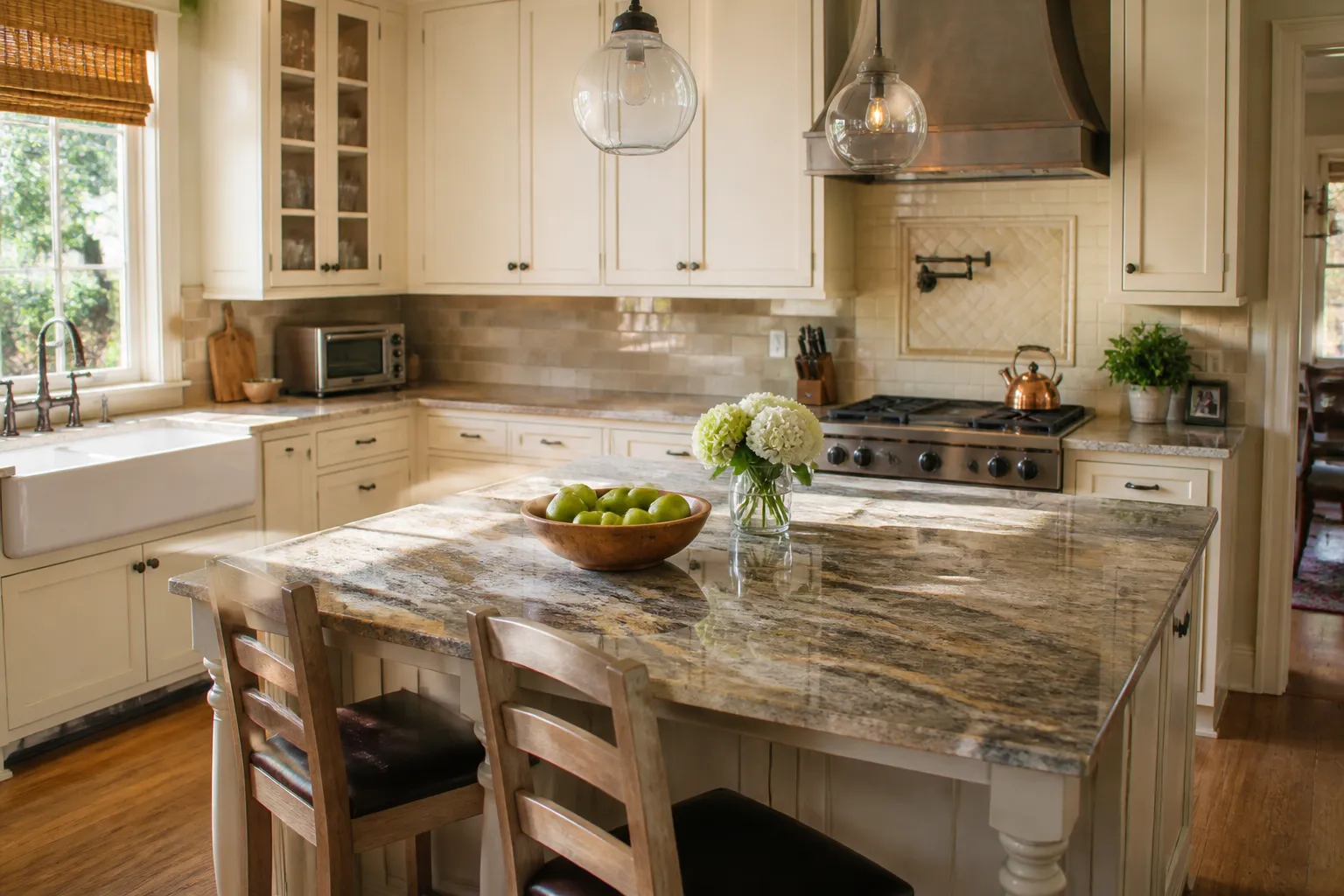
Granite brings natural pattern and depth to a vanity. Each slab is different, so it can create a distinctive focal point in a powder room or primary bath. Granite is durable, but it should be sealed as recommended for the specific stone. Wipe up spills from cosmetics, hair color, oils, and cleaners rather than letting them sit.
View the full slab when possible. A small sample may not show the amount of movement or color variation that will appear across a vanity top and backsplash.
Marble for a classic finish
Marble is often chosen for its light, timeless appearance. It works especially well in bathrooms with traditional or spa-inspired design. However, it can etch from acidic products and can show marks more readily than quartz or granite. This does not mean marble is off limits. It means the homeowner should be comfortable with its natural aging and follow care guidance carefully.
A smaller vanity can be a practical place to use marble if the look is important and the maintenance expectations are clear.
Solid surface and laminate options
Solid-surface materials offer a consistent, seamless appearance and are available in many colors. Some marks may be repairable depending on the product and damage. They can be a useful option for clean, contemporary bathrooms or projects where a smooth integrated look is preferred.
Laminate has also expanded beyond basic patterns. It can provide stone-inspired visuals at a controlled budget. It is important to protect seams and edges from prolonged water exposure and to avoid harsh treatment that can chip or scratch the finish.
Do not forget the sink and edge
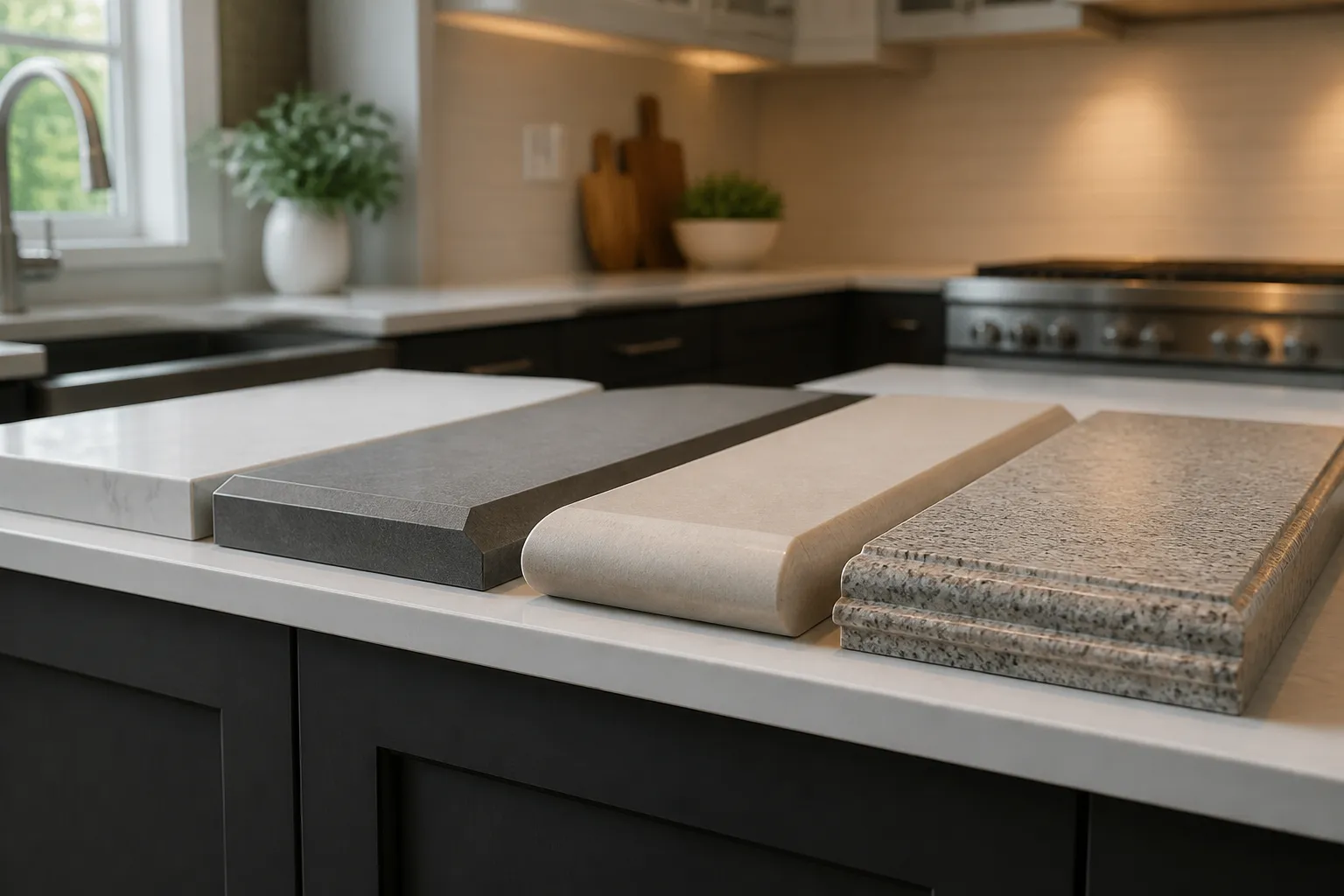
Your sink selection affects the finished vanity. Undermount sinks create a smooth countertop edge that is easy to wipe into the basin. Vessel sinks make a stronger style statement but need the right faucet height and counter layout. An eased edge is versatile and easy to clean, while a more detailed profile can add traditional character.
For a bathroom project in Marietta, bring tile samples, cabinet color, and sink ideas to the selection appointment. A countertop professional can help you compare materials, confirm the needed cutouts, and choose a surface that is practical as well as beautiful.