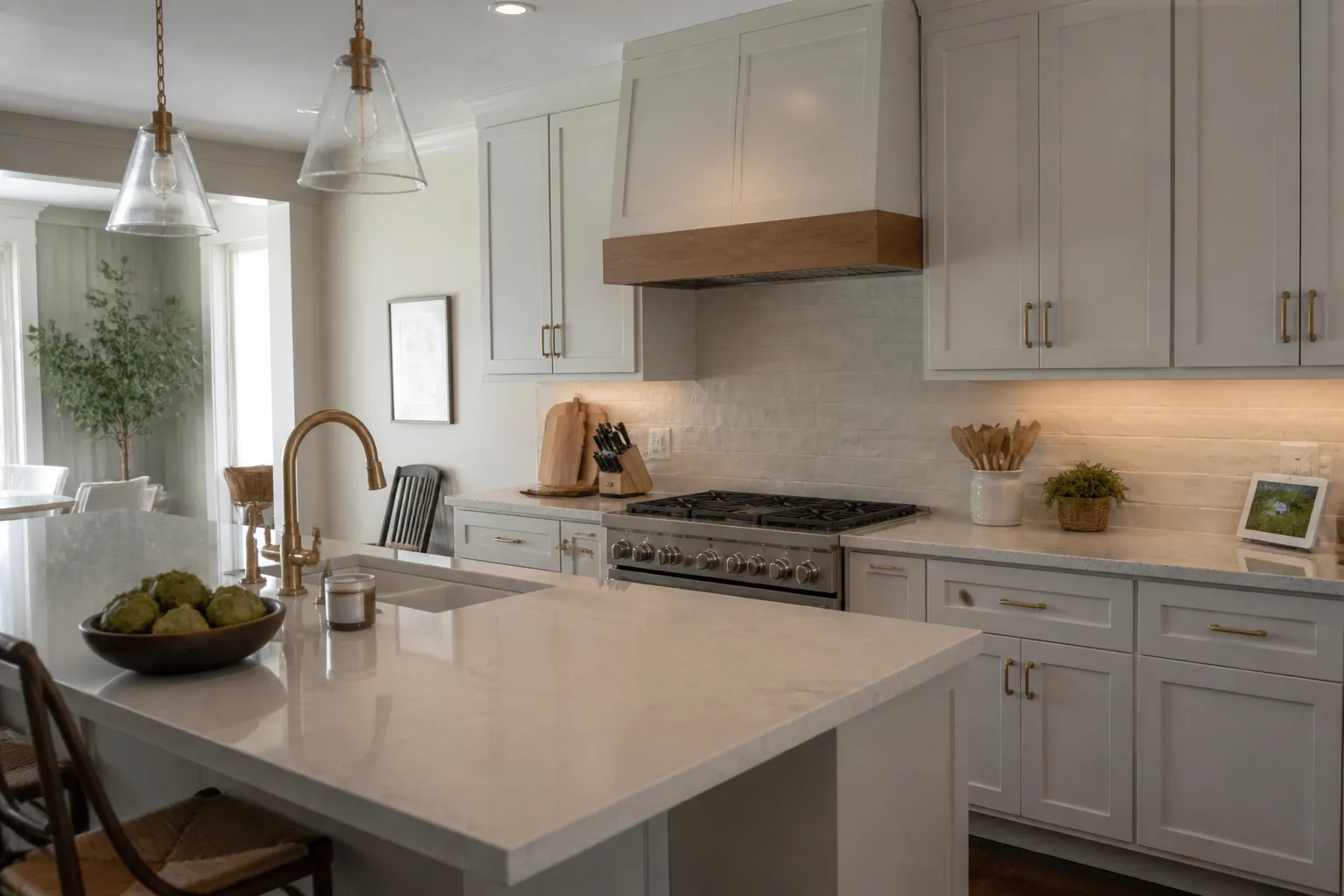
Marietta Countertops helps homeowners and businesses across Marietta, GA choose, fabricate and install the right countertop. A waterfall island is one where the countertop turns 90 degrees at the end and runs down to the floor, so the stone forms the side panel instead of cabinetry. It is a striking detail, and it is one of the most-requested island features right now.
It is also frequently under-budgeted, because the cost is not in the extra square footage so much as in what that extra piece does to the slab layout.
What it actually costs
A waterfall end adds material, fabrication and installation:
- Material. Each waterfall leg is roughly 36 by 40 inches of stone. Two legs is about 20 square feet. On its own that is modest.
- The slab problem. The legs have to come from the same slab as the island top for the colour to match, and often they have to come from an adjacent area of the slab for the pattern to continue. That frequently means buying an extra slab you would not otherwise need. This is where the real cost sits.
- Mitred edge fabrication. The corner is a 45-degree mitre, cut, glued and polished so it reads as a single folded piece. It is skilled, slow work and it is priced accordingly.
- Installation. Heavier, more fragile pieces and a corner that must land perfectly. Expect a longer install.
As a rough planning figure, a waterfall island commonly adds somewhere in the range of a few thousand dollars to an island that would otherwise have a standard edge, and more on a premium or heavily veined material. Your fabricator’s slab yield is what determines the real number, which is why the quote should be based on your actual layout rather than a per-foot estimate.
Vein matching is the whole game
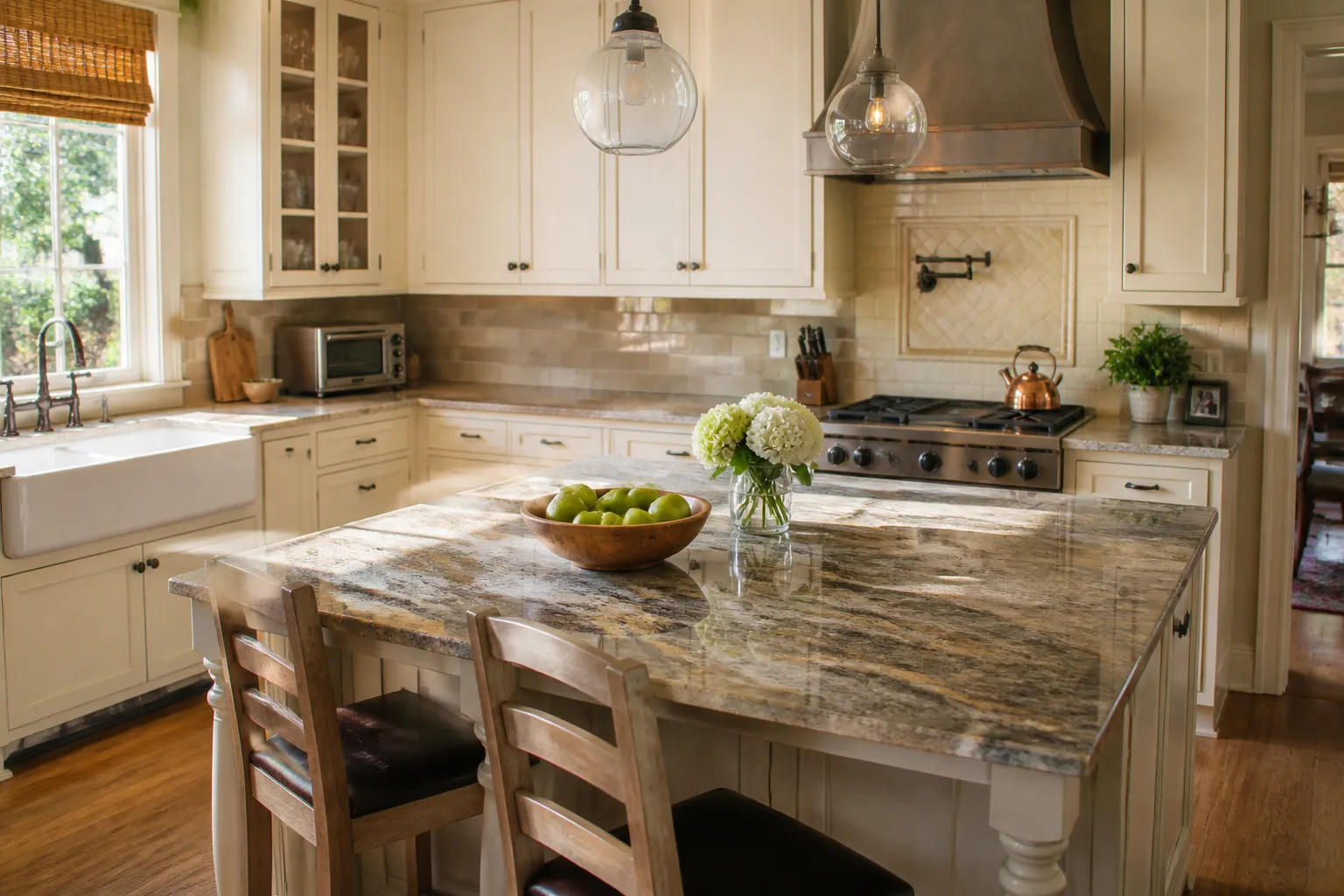
On a plain or lightly speckled stone, a waterfall reads as clean and architectural and matching is easy. On a dramatic veined quartzite or marble, the veining should appear to flow over the edge and continue down the leg. Done well, it is the best-looking detail in the kitchen. Done badly — veins running off in unrelated directions at the corner — it looks like a mistake.
Ask specifically whether the fabricator will mitre-match the veining, and ask to see the slab layout with your pieces drawn on it. This is standard practice and any good shop will show you.
Our waterfall countertop quotes include the slab layout so you can see exactly where the legs are coming from.
Where it works
Open-plan kitchens where the island is visible from the living area
This is the classic case. The island is furniture as much as work surface, and the waterfall makes it read as a solid object rather than a row of cabinets.
Materials with something to show
A quartzite with real movement, a dramatic quartz, a deep soapstone. The detail rewards a material worth looking at.
Islands with seating on the opposite side
If the stools are on the long side, the waterfall end stays clean and undamaged.
Where it does not
When you need storage in the island end
A waterfall leg covers the end panel completely. No end cabinet, no open shelving for cookbooks, no towel bar. In a small kitchen where the island is a significant share of the storage, this is a real loss.
In a busy traffic route
The stone goes all the way to the floor, so it meets vacuum cleaners, chair legs, shoes and mops. A mitred corner is the most vulnerable part of the whole installation. In a household with young children and a narrow walkway, it will take hits.
On a small island
Under about six feet, a waterfall on both ends can make an island look heavy and squat. One end only is sometimes the better answer.
When the budget is tight elsewhere
If the choice is between a waterfall edge and upgrading the material across the whole kitchen, the material usually gives more. A thicker mitred edge profile on a standard island delivers some of the same visual weight for much less.
Alternatives worth considering
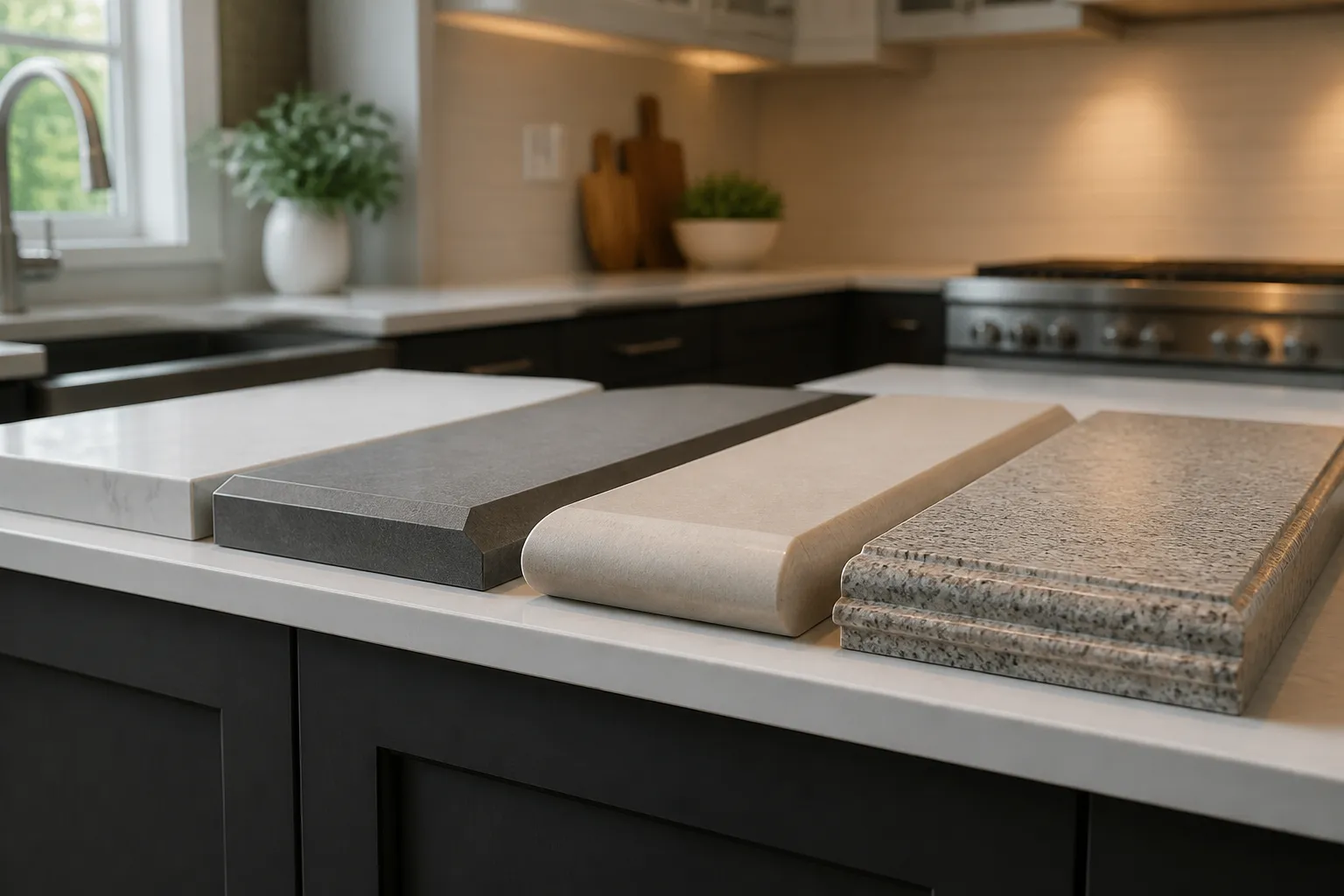
A mitred edge build-up — where the edge is thickened to two or three inches without running to the floor — gives a similar substantial look and keeps the end cabinet. A contrasting painted or panelled island end is another route, and it costs a fraction.
See our kitchen island countertops page for the edge profiles we fabricate.
Frequently asked questions
Does the waterfall have to go to the floor?
Traditionally yes. Some designs stop at a toe-kick reveal, which protects the bottom edge and looks intentional.
Can a waterfall be added later?
Almost never with matching stone. The slab will be gone. Decide before fabrication.
Is one waterfall end acceptable, or does it need two?
One is common and fine, particularly where the other end meets a wall or a range.
What happens if the corner chips?
A small chip can be filled and polished. A significant break at a mitre is difficult to repair invisibly, which is the argument for placing it out of traffic.
See the slab layout first
We will show you where the legs come from and what the extra slab does to the price before anything is cut. Call (470) 427-6789.