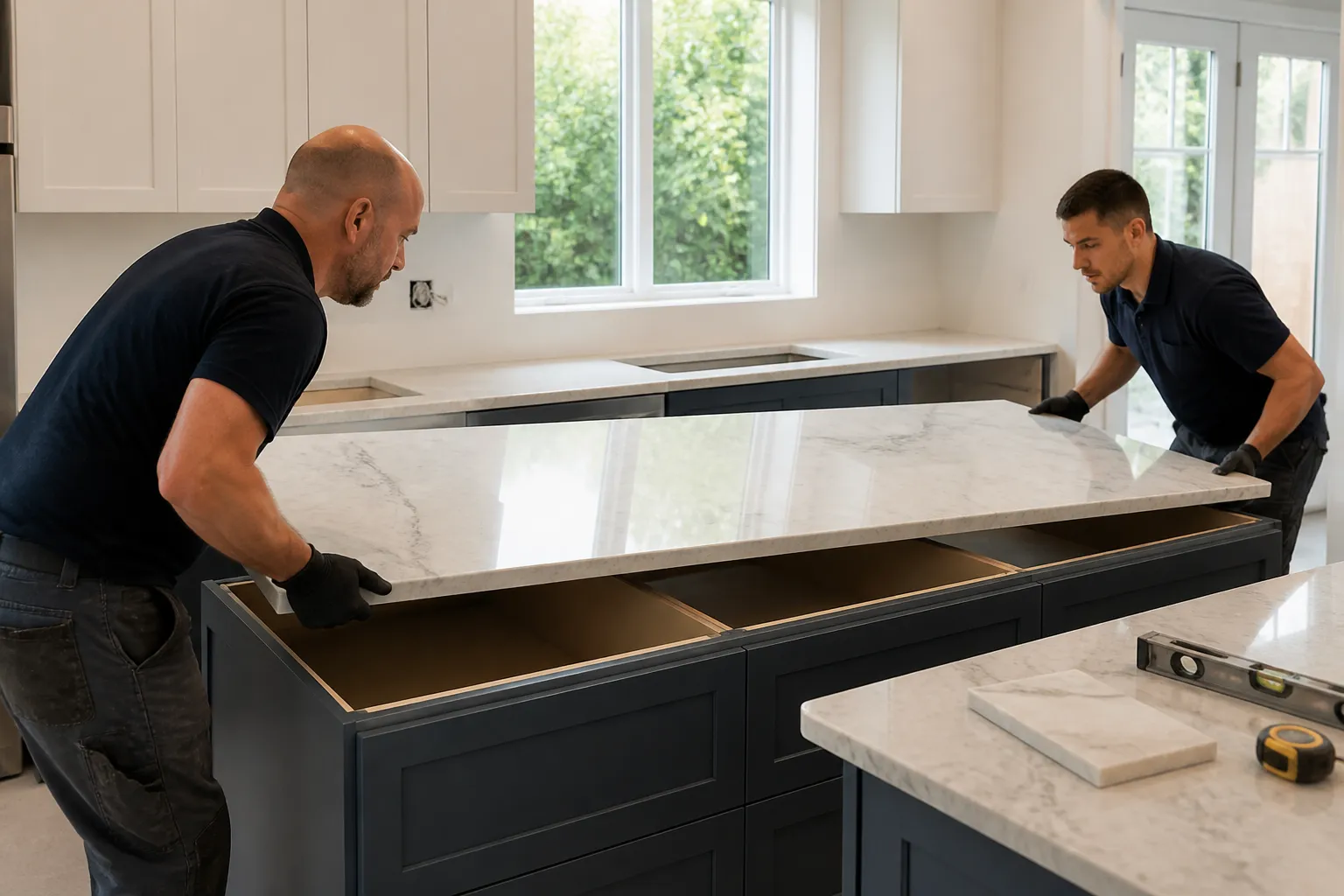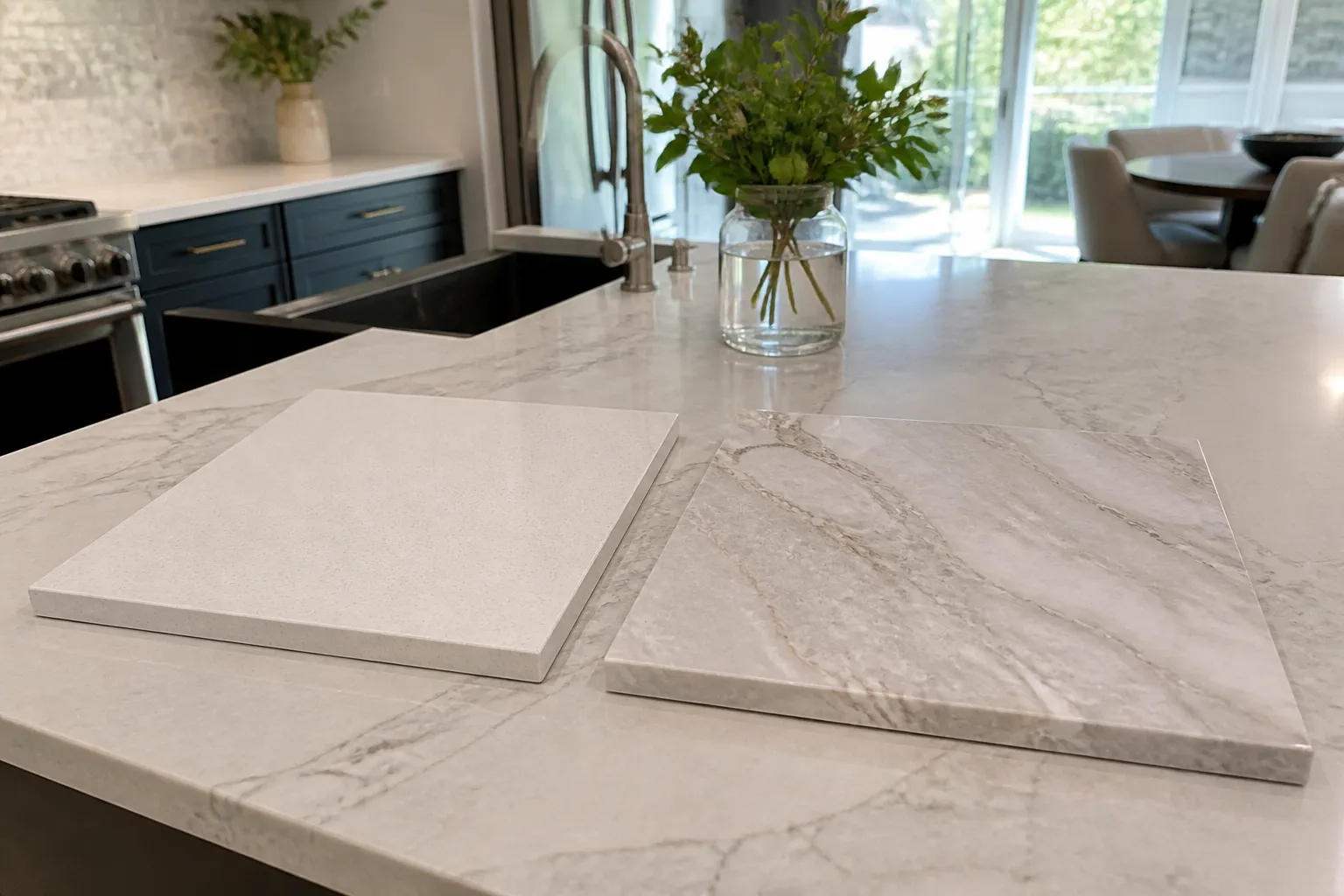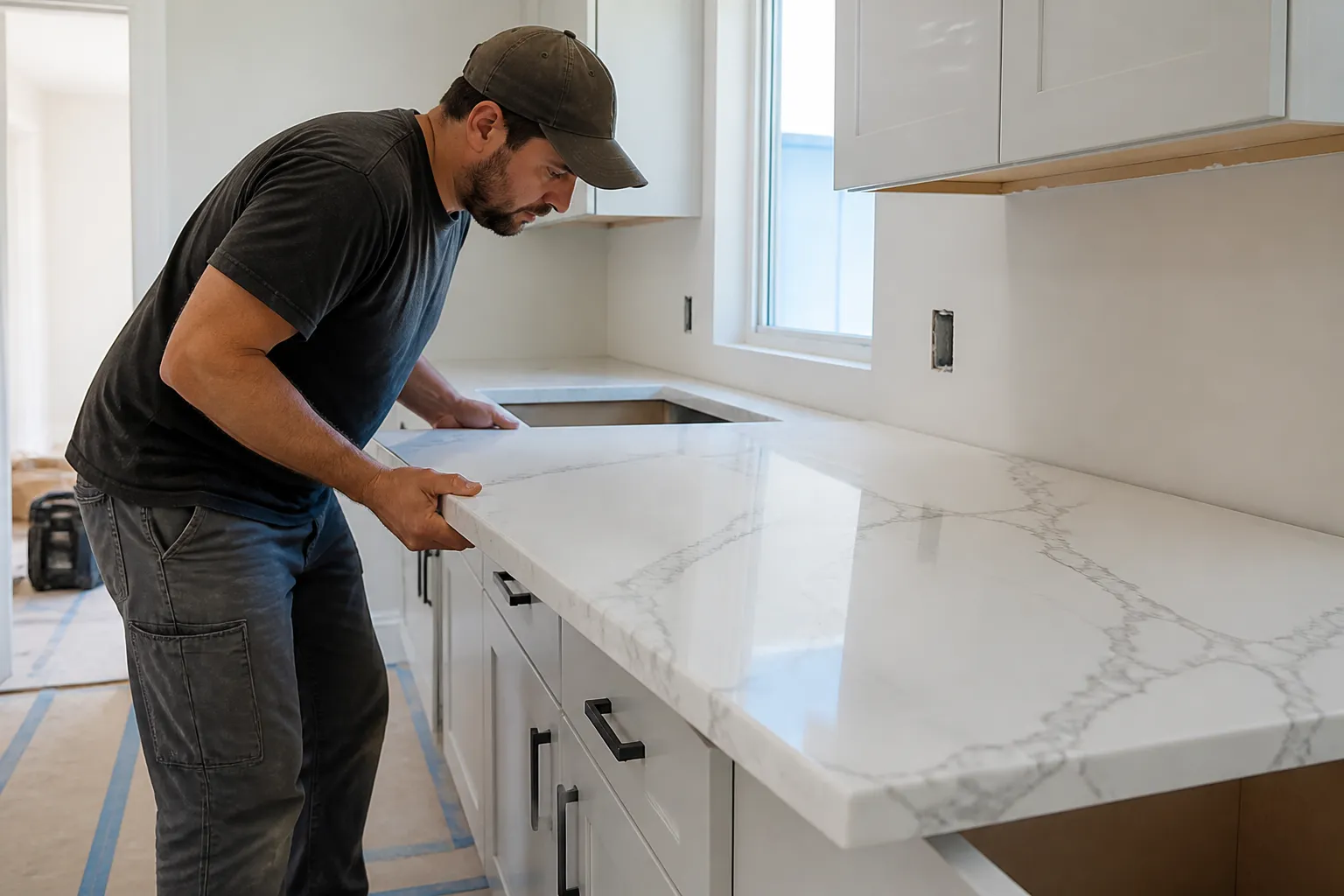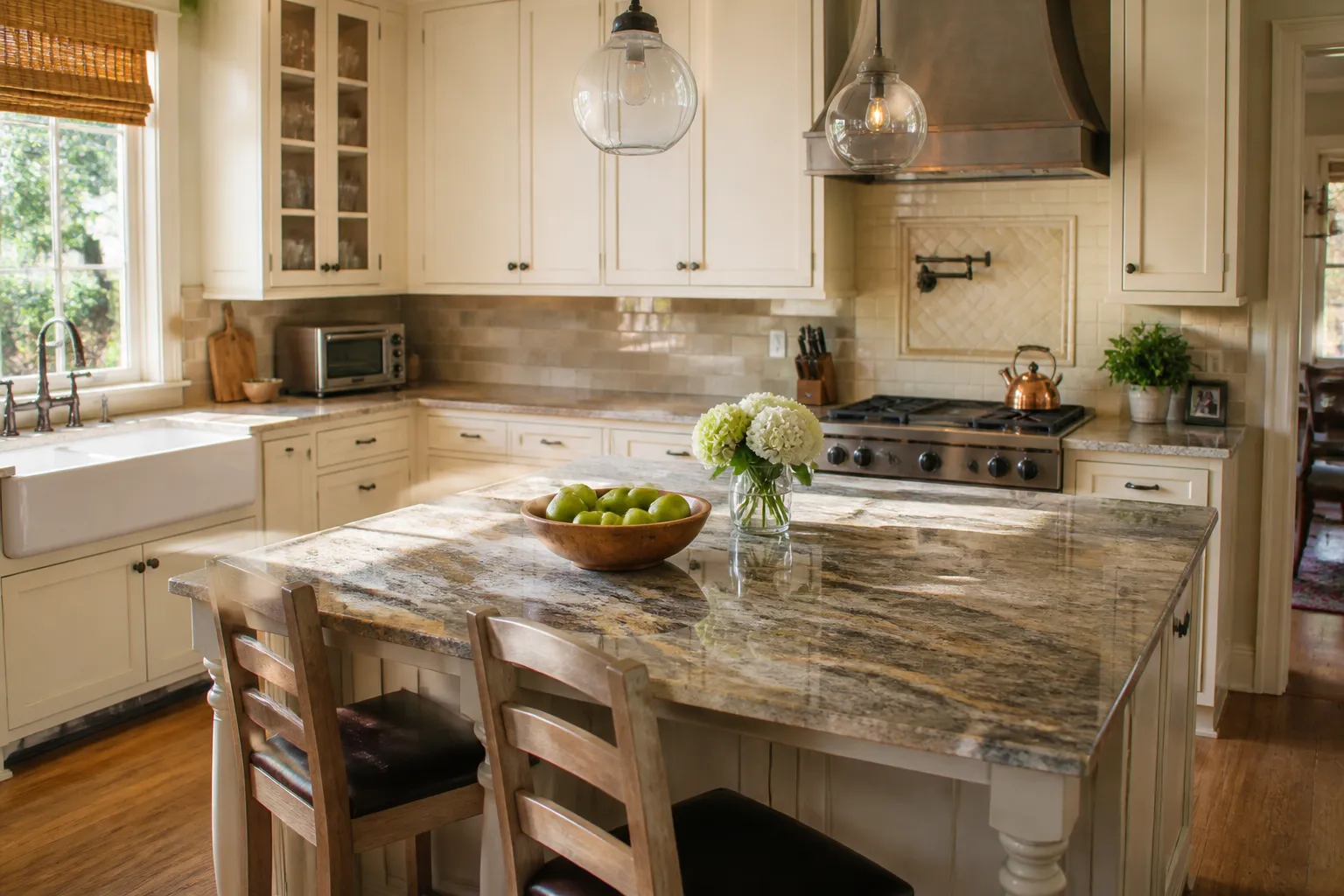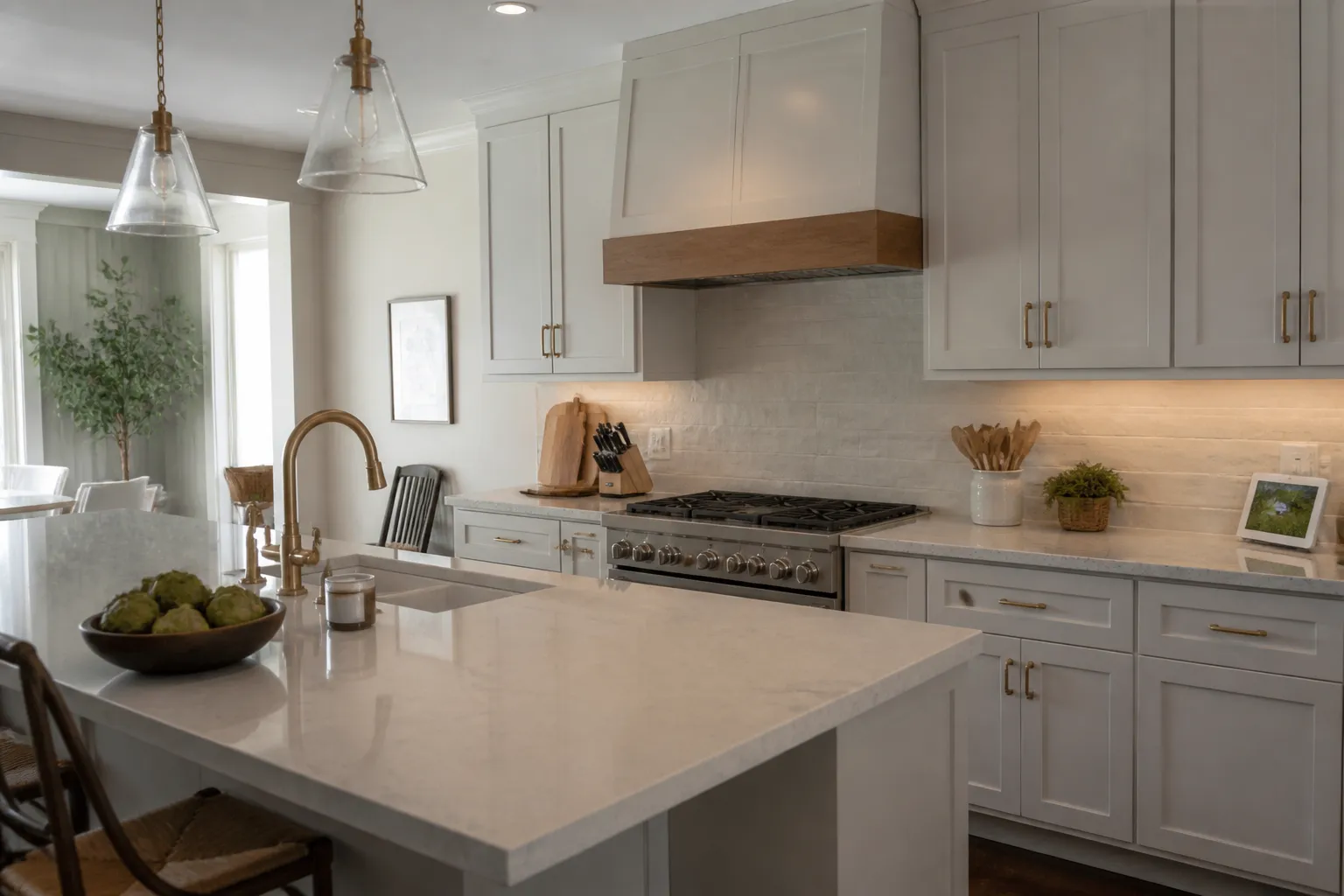
Marietta Countertops provides practical countertop guidance in Marietta, GA. A countertop edge may seem like a small detail, but it affects the finished look, cleaning routine, and character of your kitchen. The profile is shaped and polished during fabrication, so it is best to choose it alongside your material, cabinet style, and overall design. A simple edge can feel modern and understated, while a more detailed profile can reinforce a traditional or decorative look.
Eased edge: simple and versatile
An eased edge has a lightly softened square profile. It is one of the most adaptable choices for kitchens because it works with modern, transitional, and traditional cabinets. The shape is comfortable to touch, easy to wipe clean, and does not compete with a patterned stone or dramatic backsplash.
If you are unsure which profile to choose, an eased edge is often a practical starting point. It lets the countertop material take center stage without adding visual weight.
Beveled edge: crisp and tailored
A beveled edge uses an angled cut along the top or bottom of the countertop. It creates a clean line and a little more dimension than an eased edge. This style can work well in kitchens with polished hardware, shaker cabinetry, or a more tailored design direction.
The angle can vary, so look at an actual edge sample rather than relying on a name alone. Lighting can emphasize the bevel differently on dark stone, light quartz, and heavily veined materials.
Bullnose and half-bullnose: softer curves
A full bullnose edge is rounded from top to bottom, while a half-bullnose rounds more noticeably on one side. These profiles have a softer, more traditional appearance and can feel comfortable in family kitchens. The curved shape reduces sharpness along the front edge, though it may allow water to travel under the lip if spills are not wiped promptly.
Consider how the rounded profile will look next to cabinet doors, drawer pulls, and other curved details in the room.
Ogee and decorative profiles
An ogee edge combines concave and convex curves for a more formal, decorative finish. It can complement traditional cabinetry, ornate lighting, or a classic stone surface. Because it includes more shaping and polishing, it can involve additional fabrication work. Its grooves also take a little more care to clean than a simple eased edge.
Other specialty profiles can create the appearance of a thicker countertop or add layered detail. Ask to see physical samples so you can feel the shape and view it from a normal standing position.
Match the edge to the material and room
Bold granite or quartzite may look best with a simple profile that does not distract from the movement. A quiet solid-color quartz can handle a little more edge detail if the room calls for it. Thickness matters too. A thicker slab or built-up edge creates more visual presence, while a standard profile can keep a compact kitchen feeling light.
When selecting an edge for a Marietta kitchen, bring cabinet and backsplash samples to your appointment. A countertop professional can show you available profiles, explain fabrication considerations, and help you choose an edge that feels cohesive, useful, and easy to live with every day.