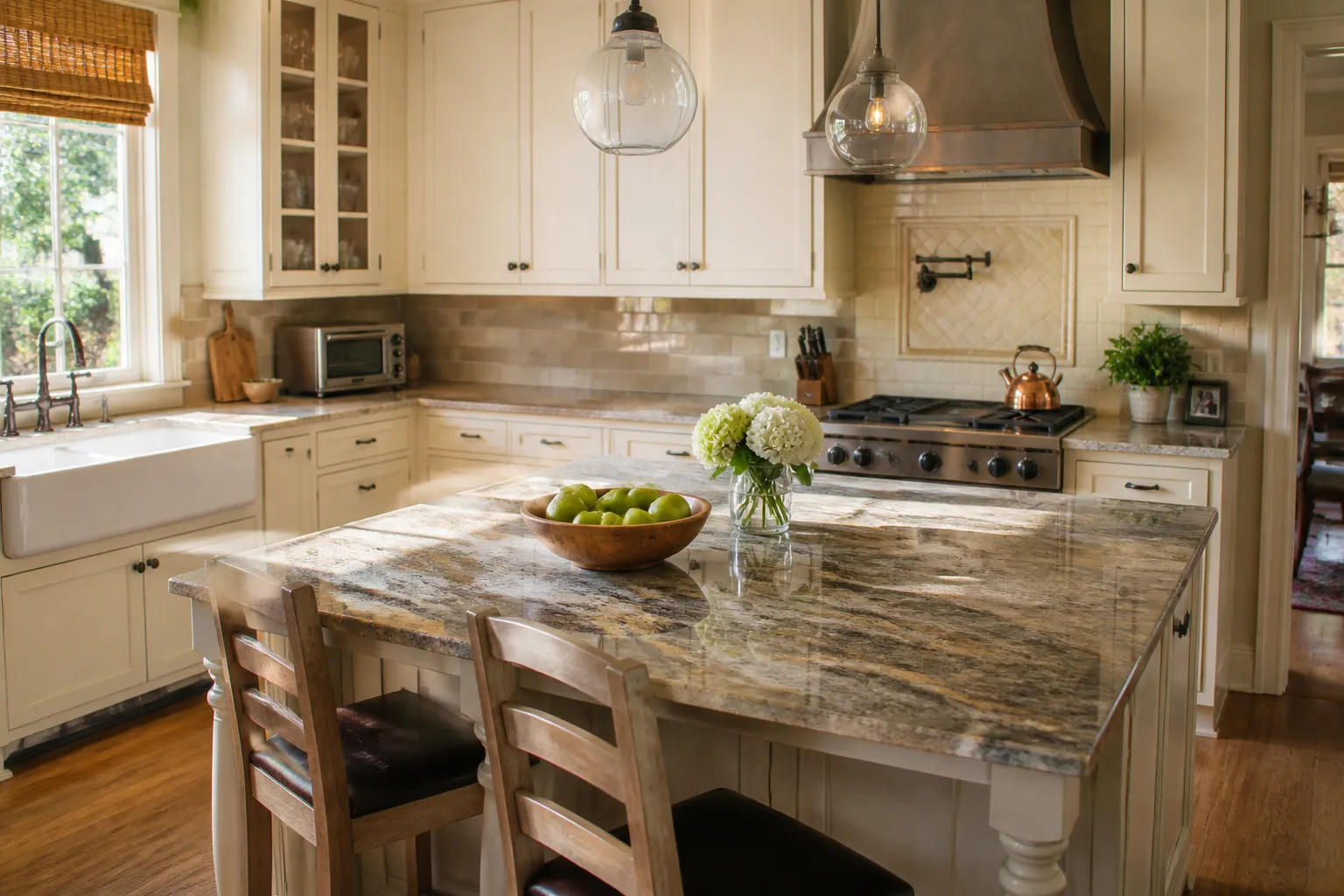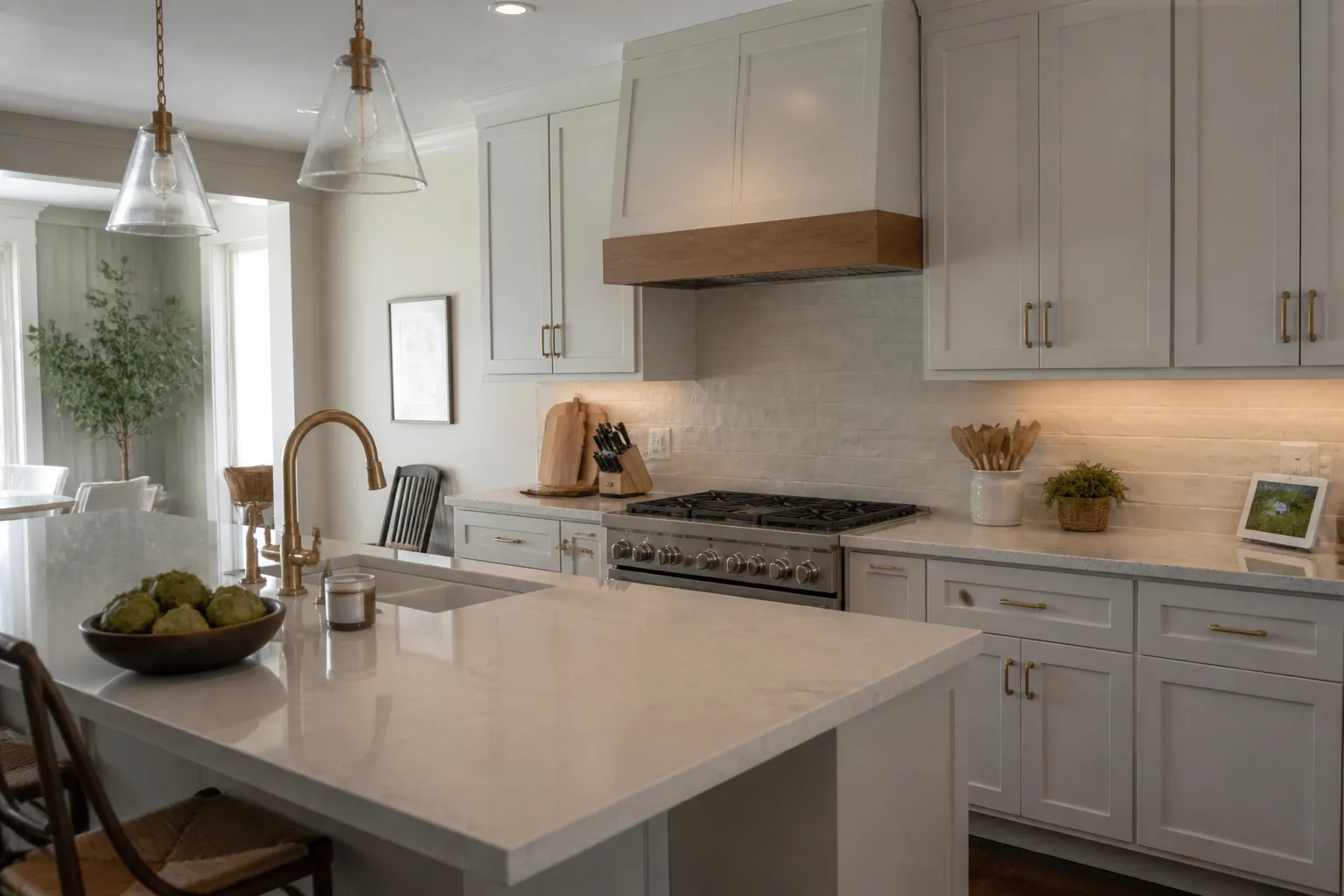
Marietta Countertops helps homeowners and businesses across Marietta, GA choose, fabricate and install the right countertop. Granite countertops can remain a long-lasting part of a kitchen or bathroom when they are selected, installed, and cared for properly. Granite is a hard natural stone, and many homeowners choose it because it holds up well to everyday use while offering unique color and movement. Its lifespan depends less on a calendar and more on the condition of the slab, the quality of fabrication, and the habits used to protect it.
Why granite holds up well
Granite is formed under intense heat and pressure, which gives it a dense, durable structure. A properly installed countertop can handle normal food preparation, serving, and household activity for many years. It also has good heat tolerance compared with many other countertop surfaces, although hot pads and trivets are still wise.
Each slab has different minerals and density, so no two pieces of granite behave exactly alike. Your fabricator can explain the characteristics and care requirements of the stone you select.
Sealing makes a difference
Granite is naturally porous to varying degrees. A penetrating sealer helps reduce the chance that liquids soak into the stone. Sealing is not a shield against every spill, but it gives you more time to clean up oils, wine, sauces, and bathroom products before they leave a mark.
How often granite needs resealing depends on the stone, the sealer, and how the surface is used. Instead of following a one-size-fits-all schedule, use a simple water test. Place a few drops of water on a clean, dry area. If the stone darkens as water absorbs, it may be time to ask about resealing.
Daily habits that help
Clean granite with a soft cloth, warm water, and a mild stone-safe cleaner when needed. Avoid abrasive pads, strong acids, bleach, and household products not intended for natural stone. These cleaners can dull the finish or weaken the sealer over time.
Use cutting boards rather than cutting directly on the counter. Granite is hard, but knife blades can dull and forceful impacts can chip an edge. Keep heavy cookware from striking corners and overhangs. Wipe spills promptly, especially anything oily, acidic, or strongly colored.
Installation and support matter
Even a durable slab needs correct support. Cabinets should be level and structurally sound before templates are made. Long spans, overhangs, cooktop cutouts, and sink areas may need special planning. Skilled measurement, fabrication, seam placement, and installation all help reduce stress points that can lead to damage.
If you are replacing old countertops but keeping cabinets, have the cabinet condition checked early. Fixing loose or uneven bases before installation is easier than trying to address them after a heavy stone top is in place.
Older granite that looks dated
Granite can last for decades, but colors that were popular years ago may not fit the look you want today. Before you replace a sound granite top, consider a few simpler steps:
- Give it a deep clean and a fresh seal. Old sealer and buildup can make stone look dull.
- Have a pro polish worn spots near the sink and stove.
- Change the backsplash, cabinet color, or hardware to shift the overall look.
Replacement makes more sense if the slab is cracked, has large chips, or no longer fits a new layout. If you move into a home with older granite, start with a clean and reseal, then decide.
When to call a professional
Small chips, dull spots, stains, or loose seams do not always mean the countertop needs replacement. A countertop professional can assess whether cleaning, resealing, polishing, or a targeted repair is appropriate. For homeowners in Marietta, maintaining granite with the right cleaning routine and timely professional guidance can help preserve its appearance and usefulness for a very long time.