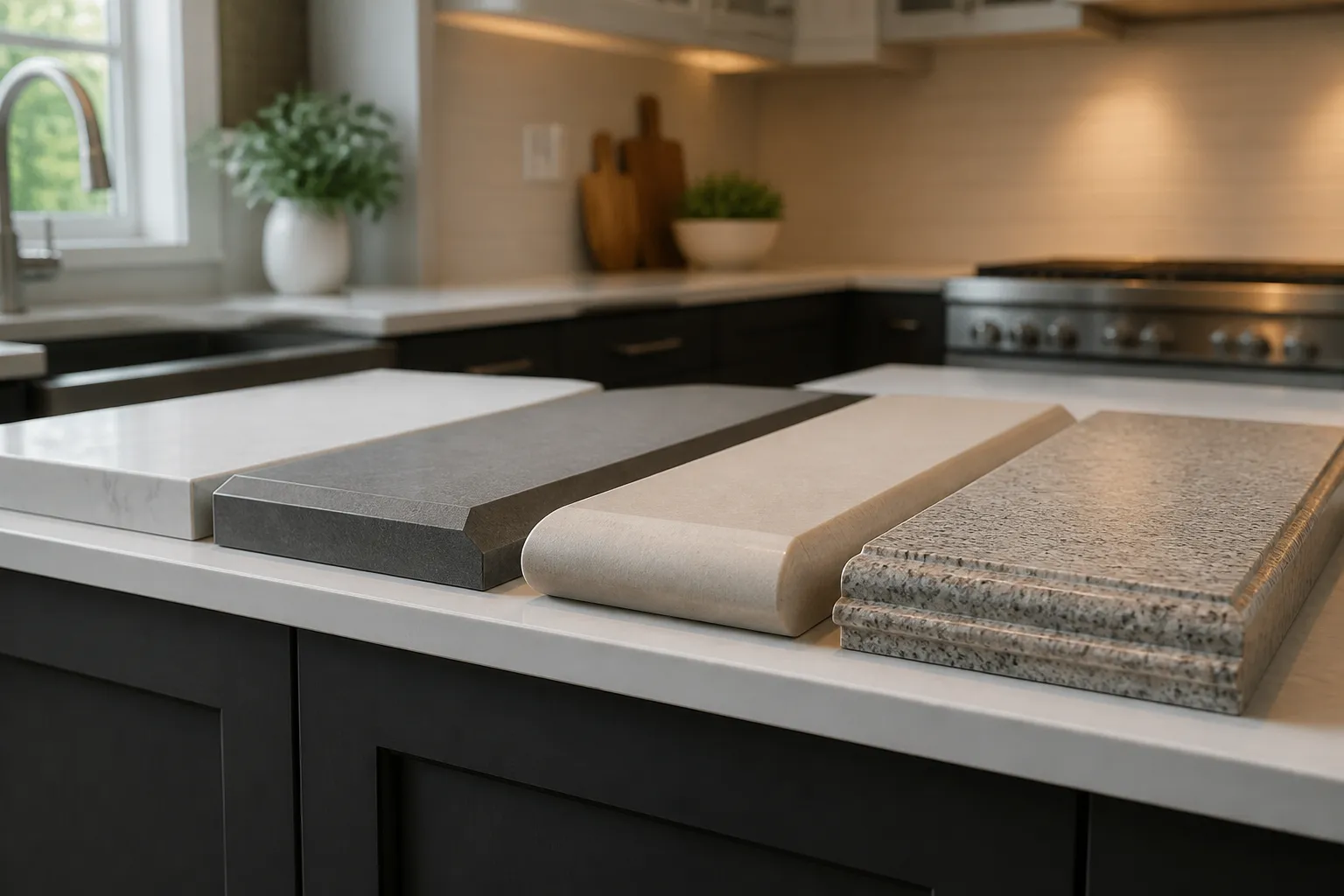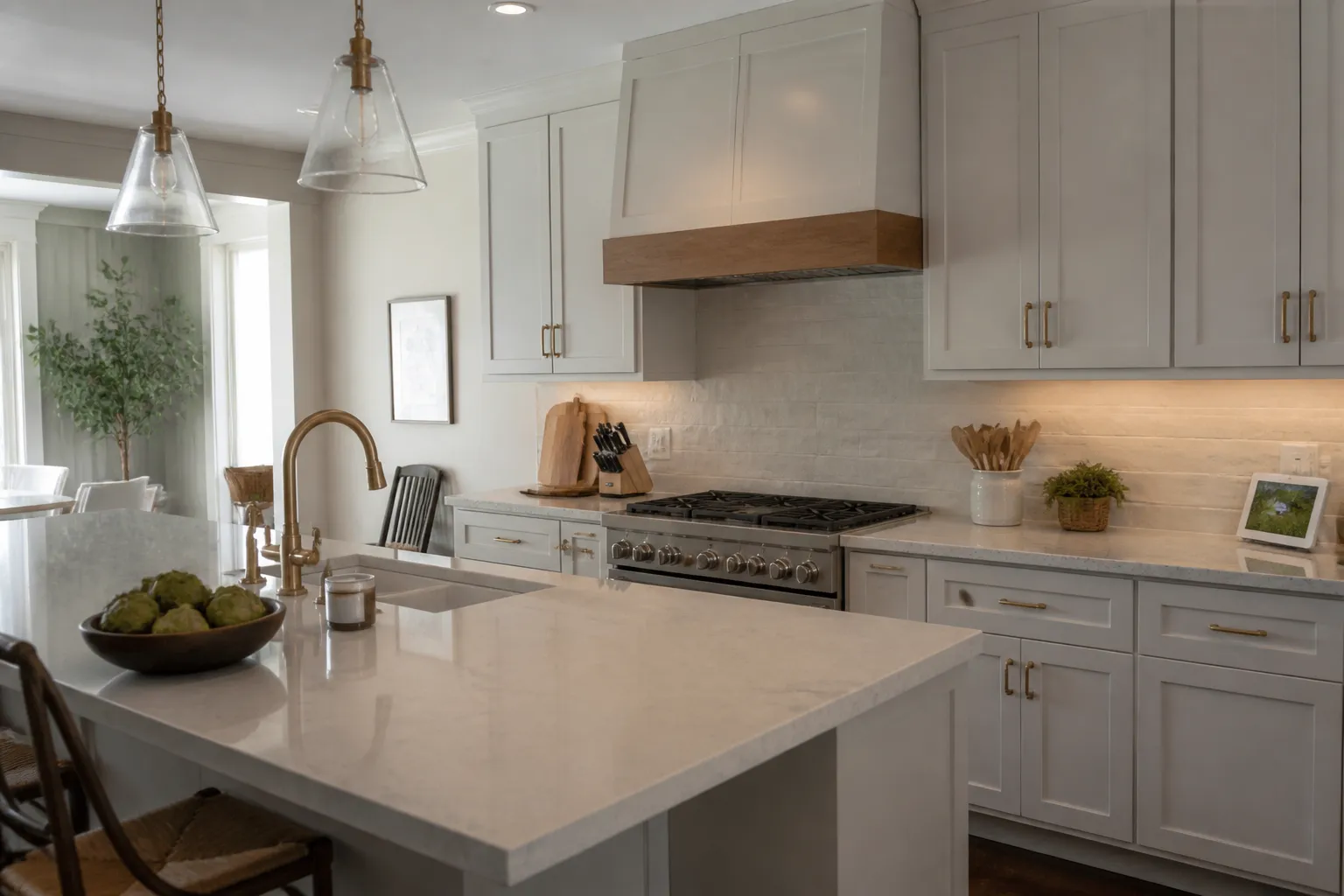
Marietta Countertops provides practical countertop guidance in Marietta, GA. The best kitchen countertop material is the one that matches your household’s priorities. Some homeowners want the lowest-maintenance surface possible. Others are drawn to natural variation, heat resistance, or a particular budget range. Instead of looking for one universal winner, compare the practical tradeoffs of the materials that fit your kitchen.
Quartz for easy everyday care
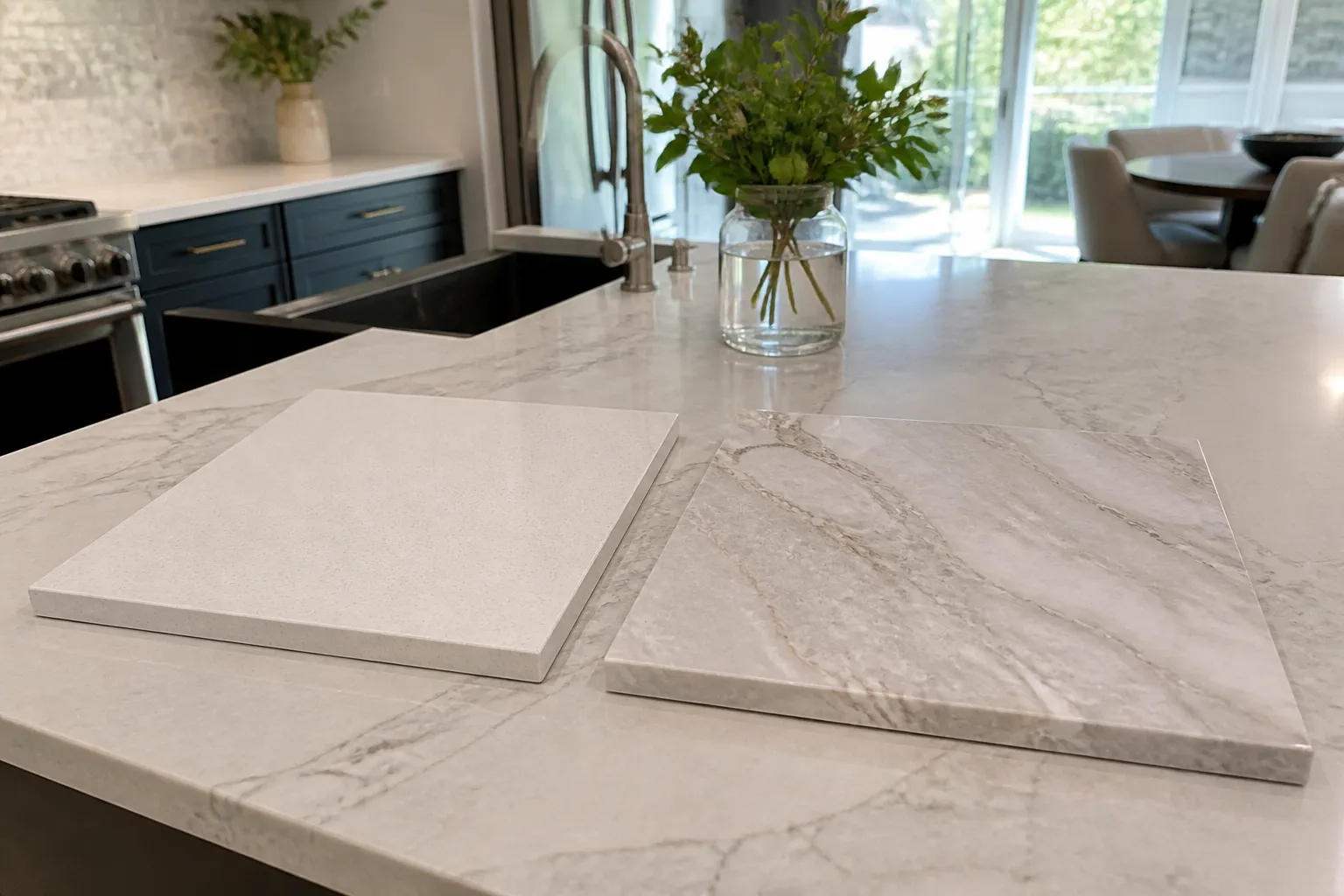
Quartz is an engineered surface made with crushed quartz and resins. Its nonporous finish makes it a popular choice for kitchens because routine cleaning is simple and spills are less likely to soak in. Quartz is available in a wide range of colors and patterns, including designs that resemble marble or concrete.
Use cutting boards and trivets with quartz. Although it is durable, it can be damaged by strong heat and should not be treated as a work surface for knives.
Granite for natural character
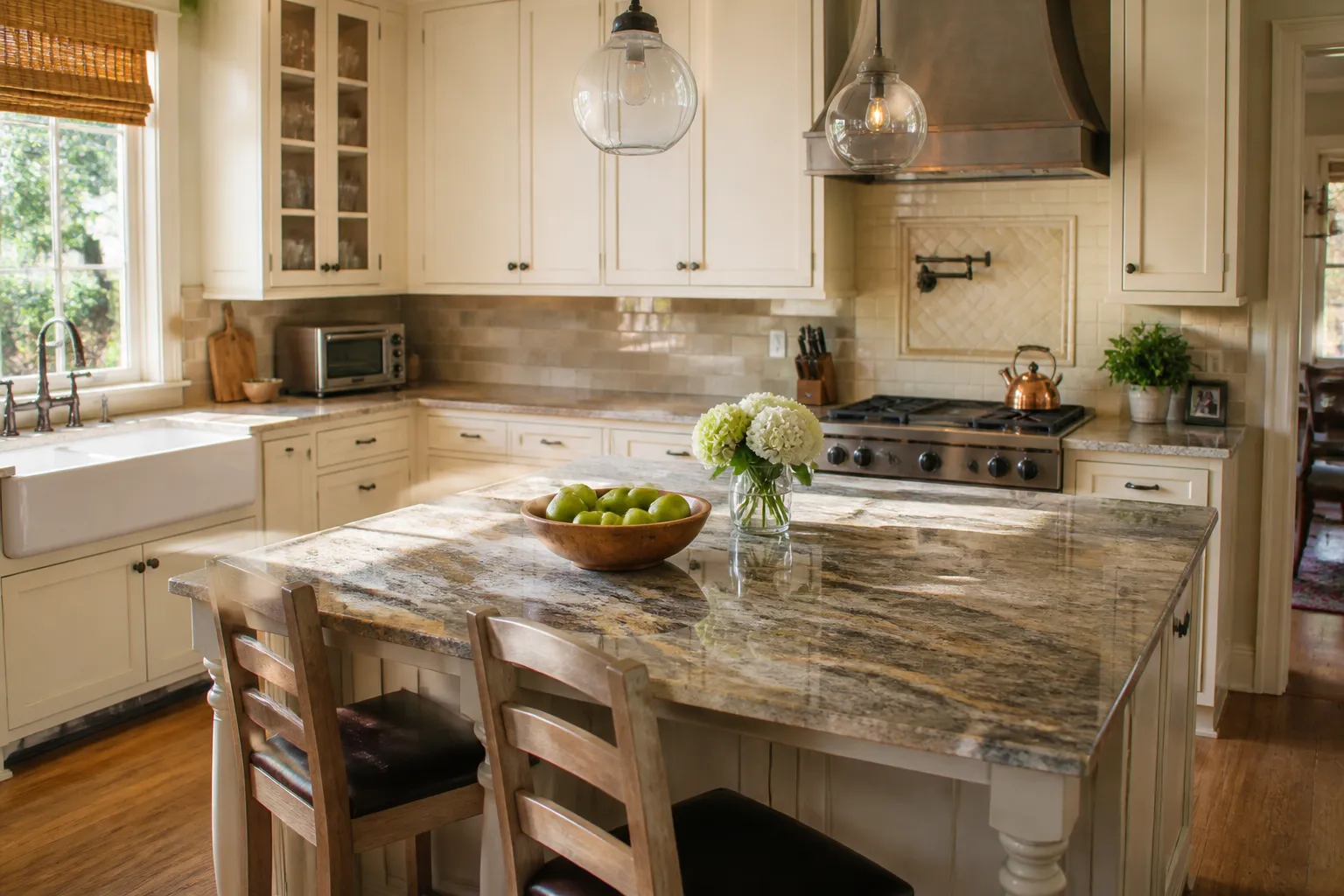
Granite is a natural stone with color variation, mineral detail, and movement that make every slab different. It is hard, durable, and generally handles heat well when common-sense precautions are used. Granite needs periodic sealing, depending on the stone and sealer, and spills should be wiped up promptly.
Granite can be a strong choice when you want genuine natural stone and are comfortable with a little routine maintenance. Always review the actual slab, not only a small sample, before making a final choice.
Marble for a classic look
Marble has a soft, distinctive veining that works beautifully in traditional, transitional, and European-inspired kitchens. It can also develop etching or patina from acids and use. Some homeowners enjoy that lived-in character; others prefer a surface that stays more uniform. Marble is often worth considering for lower-impact areas, baking stations, or kitchens where its care needs are understood from the start.
Quartzite for stone appeal and strength
Quartzite is a natural stone, not the same product as engineered quartz. It can offer dramatic visual movement and good durability, but each slab has its own properties. Sealing and care recommendations vary, so ask about the specific material you are considering. Verify the stone’s identity as well, since showroom labels can be confusing.
Laminate and solid surface for flexible projects
Laminate offers many colors and patterns, including stone-look options, and can be a useful solution when the project calls for a controlled budget. It is vulnerable to sharp cuts and direct heat. Solid-surface materials provide a smooth, consistent appearance and may allow some scratches or marks to be repaired. Their seam and heat characteristics should be discussed with the fabricator.
Make the final decision in context
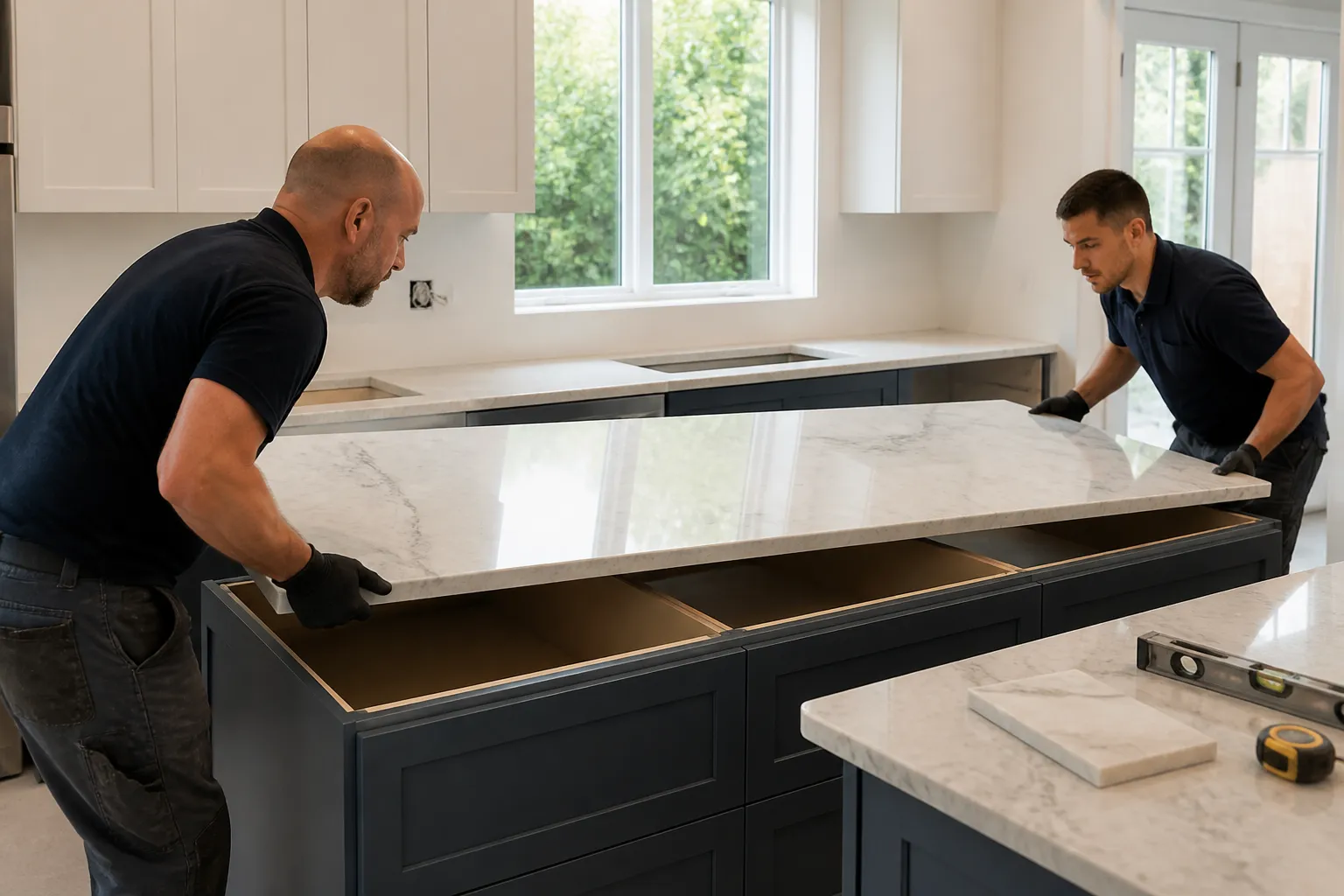
Bring cabinet samples, backsplash ideas, and photos of your room when comparing materials. Look at full-size samples in the lighting you actually use. Then review the complete scope, including thickness, edges, sink cutouts, seams, backsplash, removal, and installation.
For homeowners in Marietta, the right countertop starts with honest priorities: appearance, maintenance, durability, and budget. A knowledgeable countertop professional can help you evaluate the materials available for your layout and choose one that works well for the kitchen you use every day.