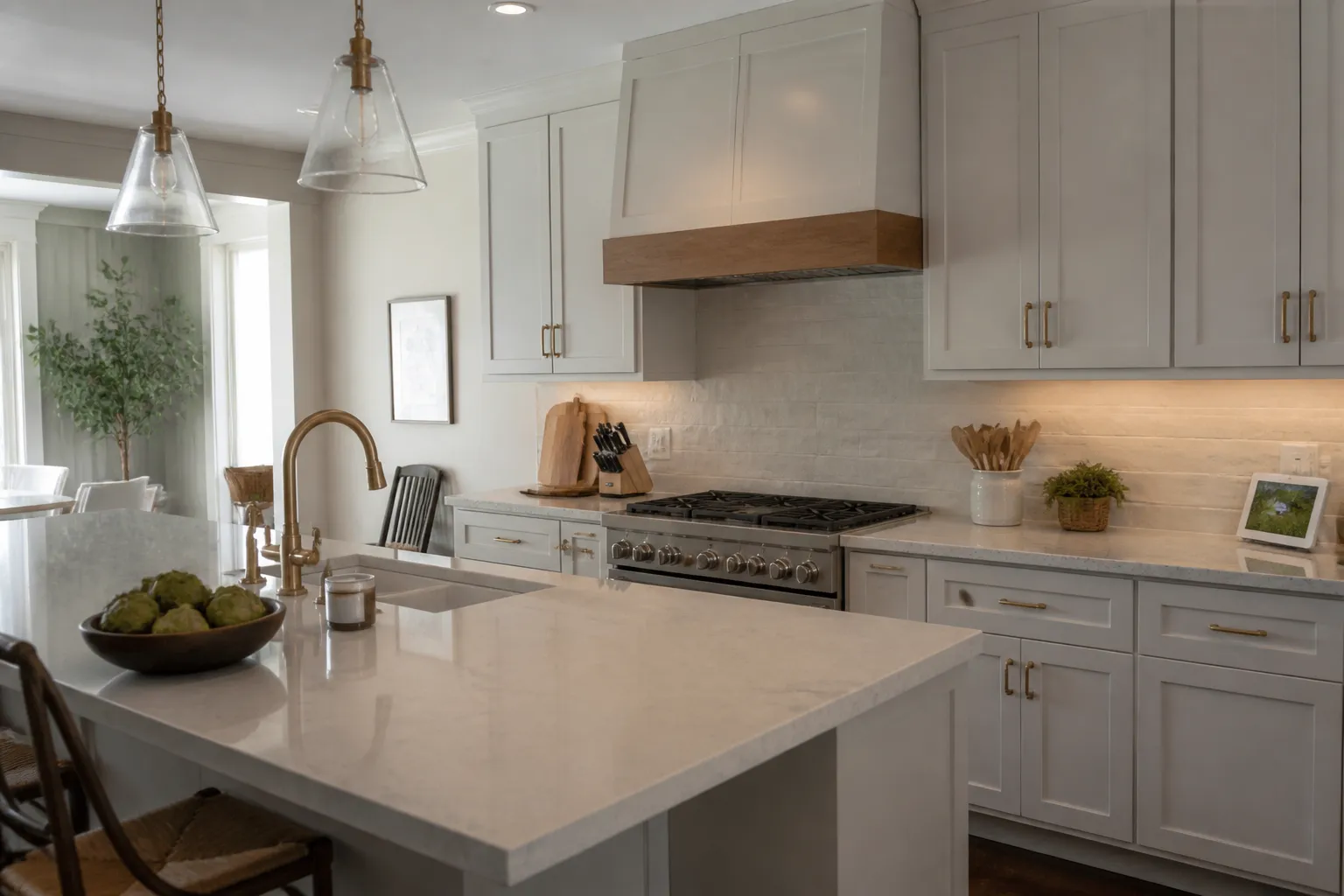
Marietta Countertops provides practical countertop guidance in Marietta, GA. Quartz and quartzite sound similar, but they are different countertop materials with different care needs. The names alone can create confusion during a kitchen or bathroom remodel. One is an engineered surface made with natural quartz particles and resin. The other is a natural stone formed from sandstone under heat and pressure. Comparing them by composition, maintenance, appearance, and heat tolerance will help you decide which fits your home.
Engineered quartz is made for consistency
Quartz countertops are manufactured from crushed quartz combined with resins and pigments. This allows a wide range of controlled colors and patterns, from simple white or gray to dramatic marble-inspired veining. Because the surface is nonporous, quartz does not usually need sealing. It is commonly chosen for its low-maintenance care and consistent appearance across a project.
For daily cleaning, a soft cloth, mild soap, and water are typically enough. Quartz resists many common spills, although you should still clean them up promptly and avoid abrasive or harsh chemical cleaners.
Quartzite is natural stone
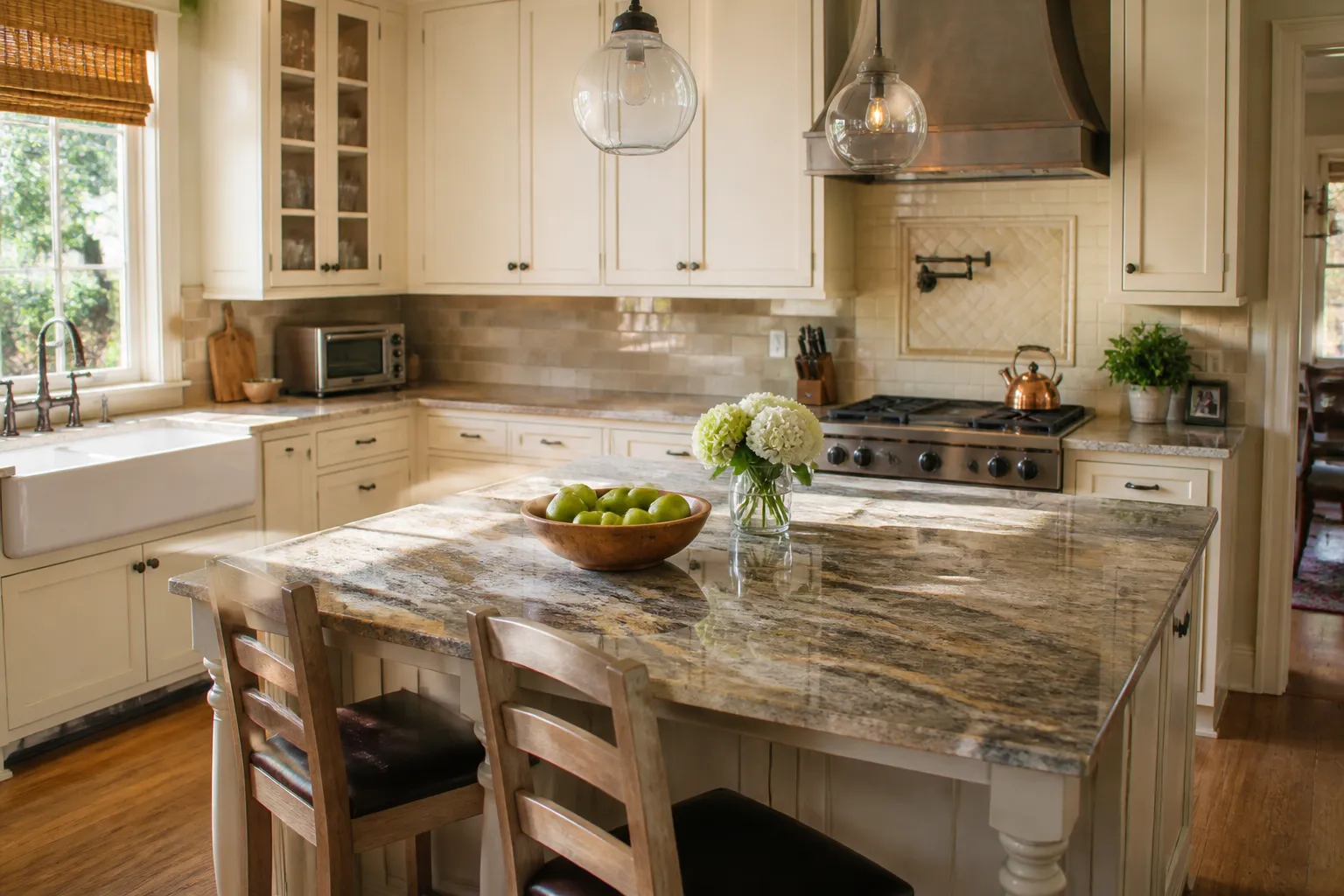
Quartzite begins as sandstone and becomes a dense natural stone through geologic heat and pressure. It often has layered movement, veining, and color variation that cannot be precisely repeated. Every slab is unique, which is part of its appeal. If you love the character of natural stone but want a surface that can be quite durable, quartzite may be worth exploring.
Because quartzite is natural stone, it generally needs sealing and thoughtful care. The exact maintenance requirements depend on the slab. Ask about the specific stone you are considering rather than assuming all quartzite performs identically.
Compare heat and scratch resistance
Both materials are durable when used appropriately. Quartzite is usually more tolerant of heat than engineered quartz, though trivets are still a sensible precaution for any countertop. Engineered quartz contains resin, which can be damaged or discolored by high heat. Do not place hot cookware directly on either surface.
Both resist scratching better than many countertop options, but neither should be used as a cutting board. Knives can dull, and heavy impacts can chip edges or corners.
Appearance and selection process
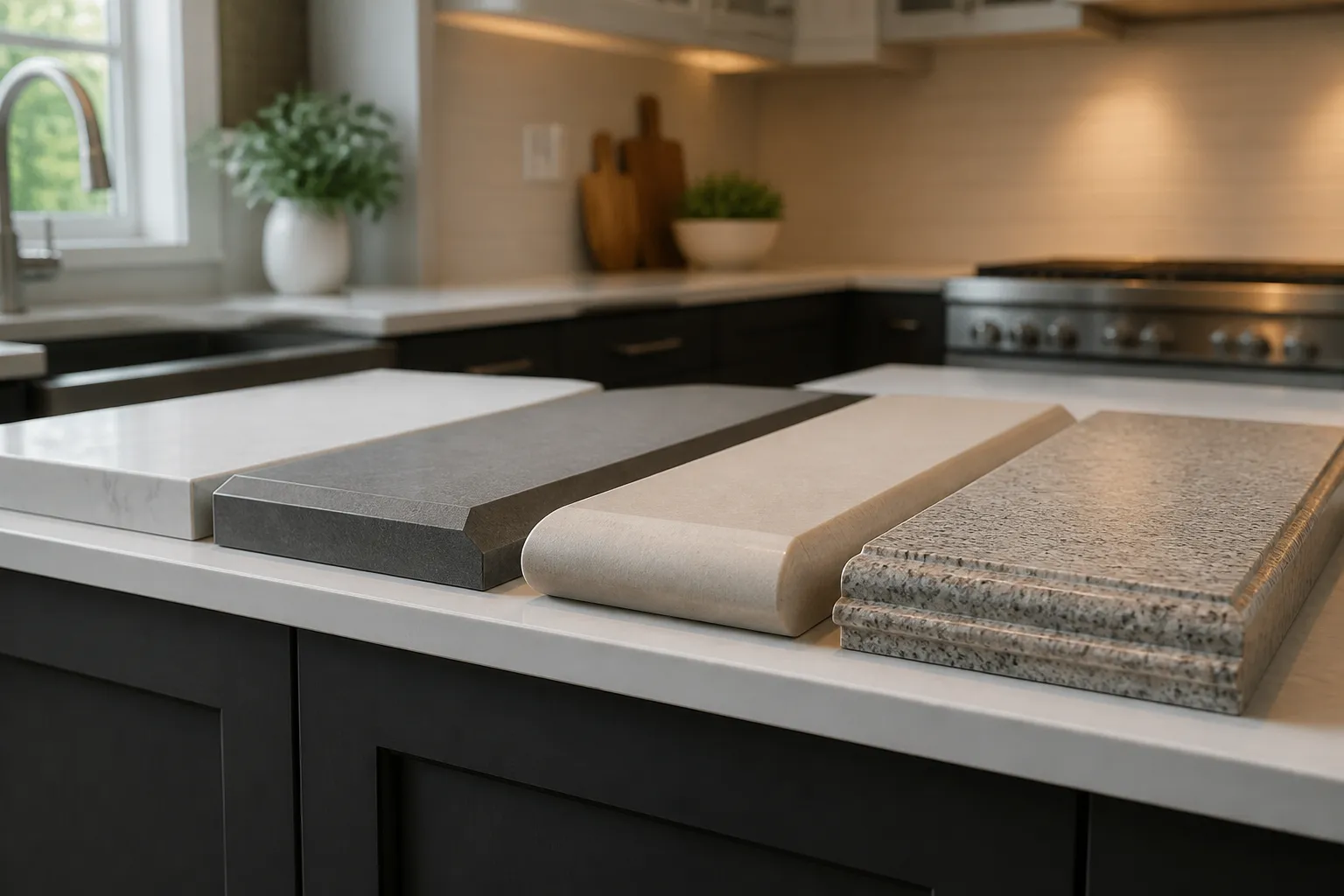
Quartz offers predictable patterning, so it is easier to coordinate a uniform look between an island and perimeter counters. Quartzite has more natural variation, and the exact slab should be viewed in person. Vein placement, color, and movement can look very different across a full slab than on a small sample.
Bring cabinet doors, backsplash samples, and flooring ideas to the showroom. View choices in lighting similar to your own kitchen. This helps reveal undertones that can be difficult to see under showroom lights alone.
Which should you choose?
Choose engineered quartz if easy cleaning, nonporous performance, and controlled design are your main priorities. Consider quartzite if you want a natural stone surface with distinctive movement and are comfortable with sealing and stone-specific care. Your budget, slab availability, fabrication needs, and kitchen layout will also play a role.
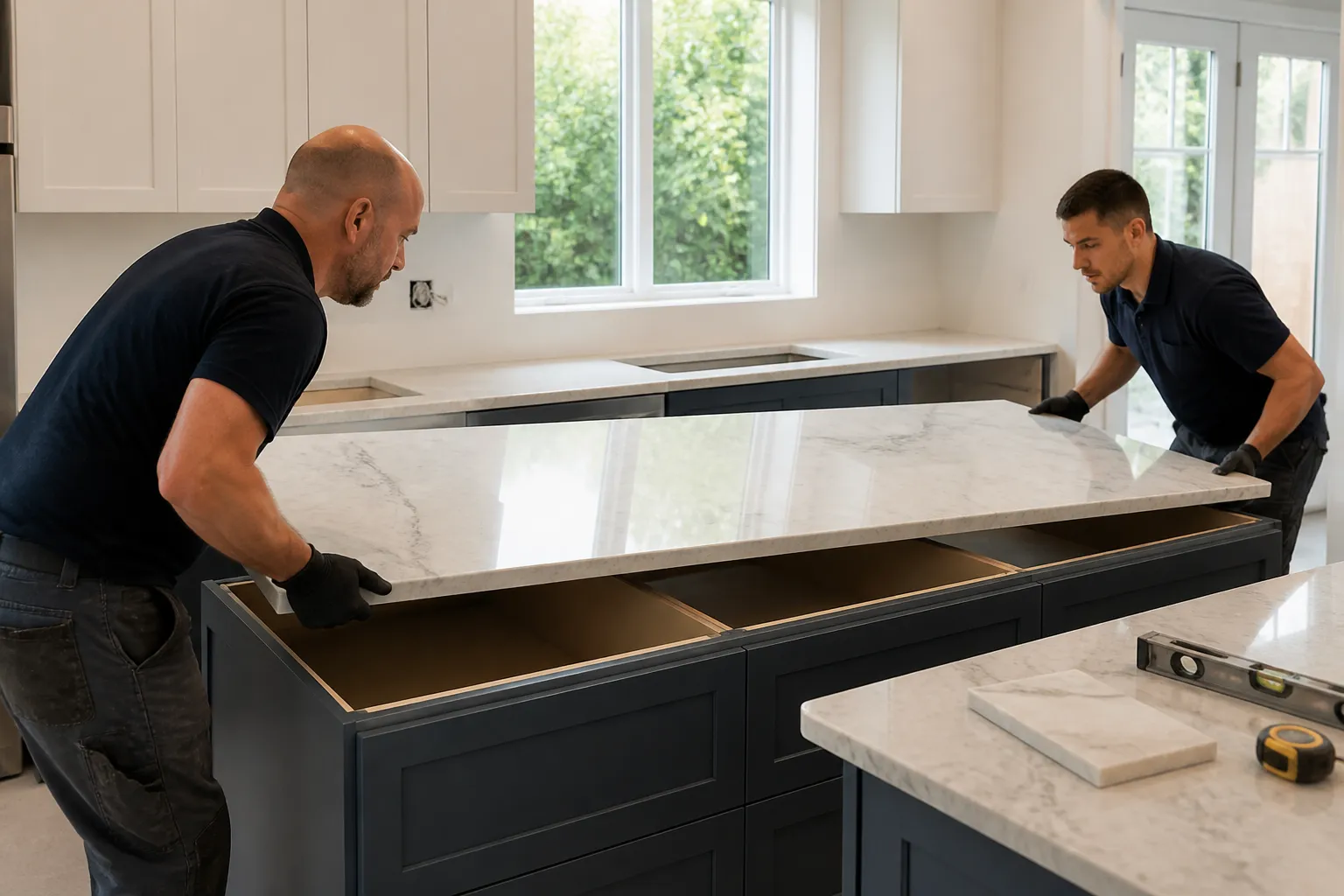
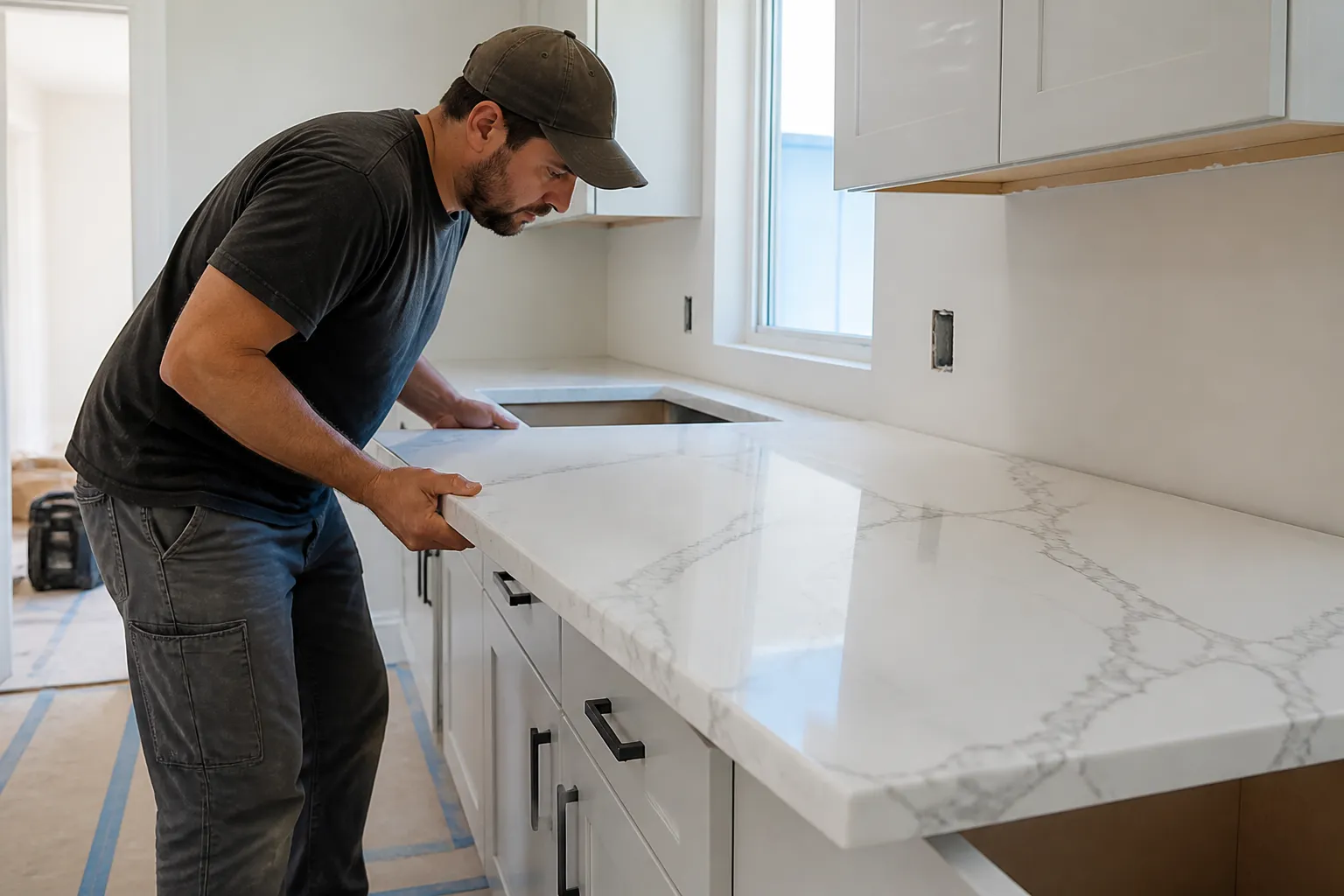
For homeowners in Marietta, a countertop professional can help explain the properties of available slabs and samples, show how seams and edges will work in your layout, and help you select the material that fits your everyday routine.